
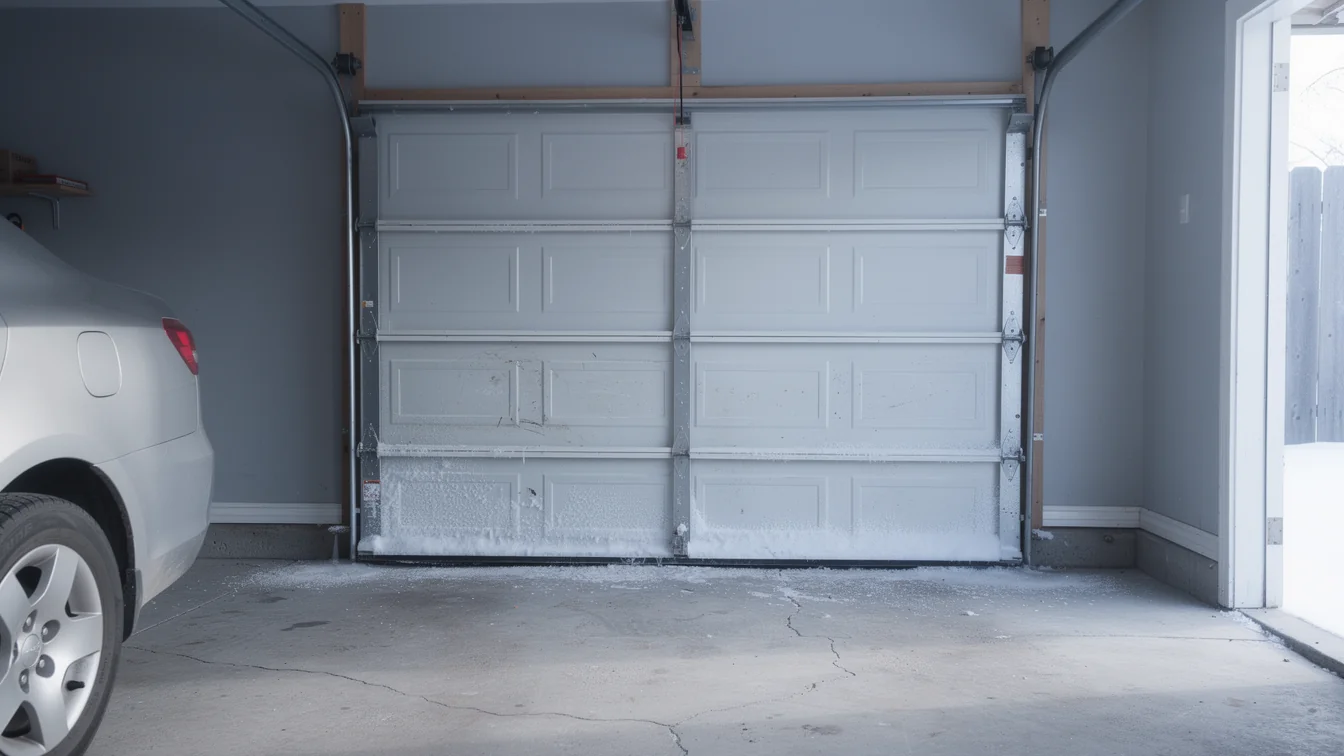
 Older Marietta Garage Doors and the Insulation Gap
Marietta homes built 1964-2007 often lack foam-filled garage doors.
Why a Garage Door Goes Off Track in Marietta
Marietta homes built mostly between 1964 and 2007 carry track hardware that ages differently than newer stock. Here's what actually knocks a door off its rails here.
Local detail
How Local Conditions Play In
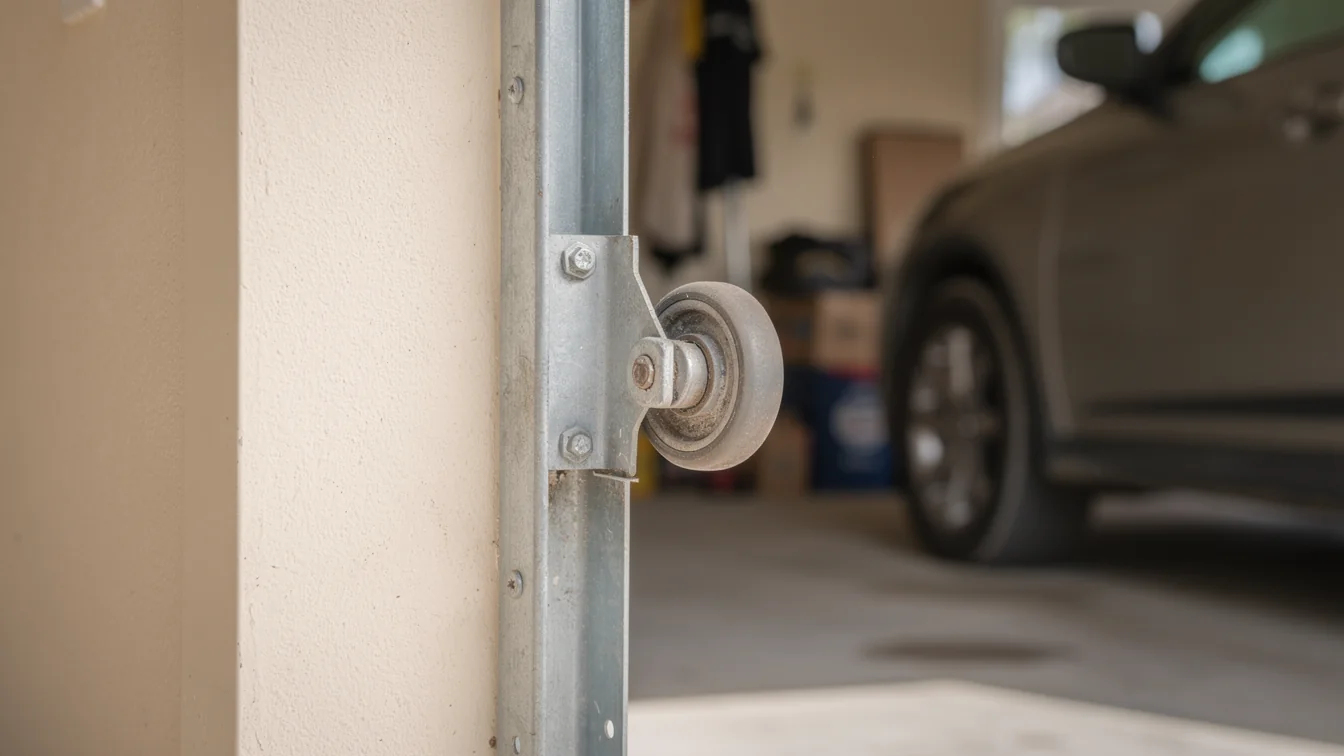
Most of the housing stock around here went up between 1964 and 2007, with a lot of it clustered in the 1980s and 90s across the eighteen or so named areas we work in. That matters more than people think. A door that was hung in 1986 is running on track brackets and lag screws that have had three-plus decades to work loose against the framing, and the roller stems on those original setups are narrower than what goes in today, so they wander in the track once the channel widens even a sixteenth of an inch.
Track goes off true in two ways: the vertical section pulls away from the jamb because the mounting screws stripped the old-growth framing lumber behind them, or the horizontal section sags because the rear hanger bracket was never rated for the heavier insulated doors that replaced the single-layer steel doors a lot of these houses started with. Both are hardware fatigue problems tied to how long the track has been doing its job, not something that shows up on a brand-new install. If your door is original to a house built in that 1964-2007 window, the track alignment is worth checking even if the door still looks fine from the driveway.
We don't see this as often on houses built after 2007, since newer track systems use heavier gauge steel and wider roller channels from the factory.
The area
Season by Season
This area sits in a cold-moderate climate band, which means the ground freezes and thaws enough times each winter to shift concrete slabs a little at the garage threshold, even on a well-built foundation. That slab movement pulls at the bottom track bracket, and over a few winters the bracket can rotate just enough that the door starts binding on one side before it ever looks crooked to the eye.
Spring is when we get the call, because that's when the slab settles back and the track that shifted all winter suddenly has to carry a door moving at normal speed again. A roller that's been riding the edge of a bent track all winter finally jumps it. Summer heat doesn't cause as much trouble here as the freeze-thaw cycle does - aluminum track expands and contracts a little, but it's the repeated winter shift-and-settle that walks the fasteners loose, not a single hot week.
If your track has been quietly drifting out of plumb over a winter, you'll usually hear it before you see it: a grinding or popping sound as the roller catches the lip of the misaligned section. That sound is worth a call before the door drops a roller entirely and jams in the opening.
What we find
What It Costs
I'm not going to put a number here that I can't back up, because what a track repair runs depends on things I can't know without looking at the door - whether it's the bracket, the full vertical section, or both sides that need replacing, and whether the door is the original 1980s steel slab or a heavier replacement panel. Those are different jobs with different parts on the truck.
What I can tell you is what drives the cost up or down: a single bent section near the bottom is a quick fix, while a door that's been running off-track long enough to bend the rollers or stress the opener's travel limits turns into a bigger job because you're replacing wear parts that failed as a result, not just the track itself. Median household income in this service area runs around $82,276, and most of the repair calls we take are for exactly the kind of bracket and section work described above rather than full door replacement - but I'd rather give you an honest number after a look at the hardware than a guess over the phone.
How we work
The Situation
Across this service area there are roughly 111,498 households, with about 37,853 of those owner-occupied houses, and a lot of that stock dates back to the 1964-2007 building wave. That's a wide spread of track hardware ages to keep straight, which is part of why we see such a range of track problems from one street to the next.
We run calls from the close-in areas like Fair Oaks, about two miles out, through places like Vinings and Mableton eight to ten miles off, and out toward Powder Springs, Austell, and Hiram further still. Doors on the older end of that 1964-2007 range, especially ones that haven't had a track inspection in a decade or more, are the ones most likely to be riding on bent or loosened hardware right now without anyone noticing yet.
If your door's been catching, dropping, or making a new noise when it opens, that's the track telling you it's lost its alignment - not something to wait out.
Questions
Common questions
My garage door jumped the track overnight - is that a seasonal thing?
It can be. A lot of our calls come in spring, after a winter of freeze-thaw cycles has shifted the slab at the threshold and walked the bottom bracket out of alignment. The door was already riding on a bent track for weeks; it just finally slipped far enough to jam.
Is a bent track always a full replacement?
No. If it's one section near the bottom that took a hit, we can usually replace just that section. It becomes a bigger job only if the door's been running off-track long enough that the rollers, hinges, or opener travel limits took damage too.
My house was built in the 1980s - should I worry about the track specifically?
It's worth a look. A lot of houses from that era are still running original track hardware with roller channels narrower than what's standard now, and three-plus decades of fastener fatigue is enough to let the track drift out of true even without any obvious damage.
Recommendation
You Might Also Like
More garage door guides for Marietta homeowners.
Older Marietta Garage Doors and the Insulation Gap
Marietta homes built 1964-2007 often lack foam-filled garage doors.
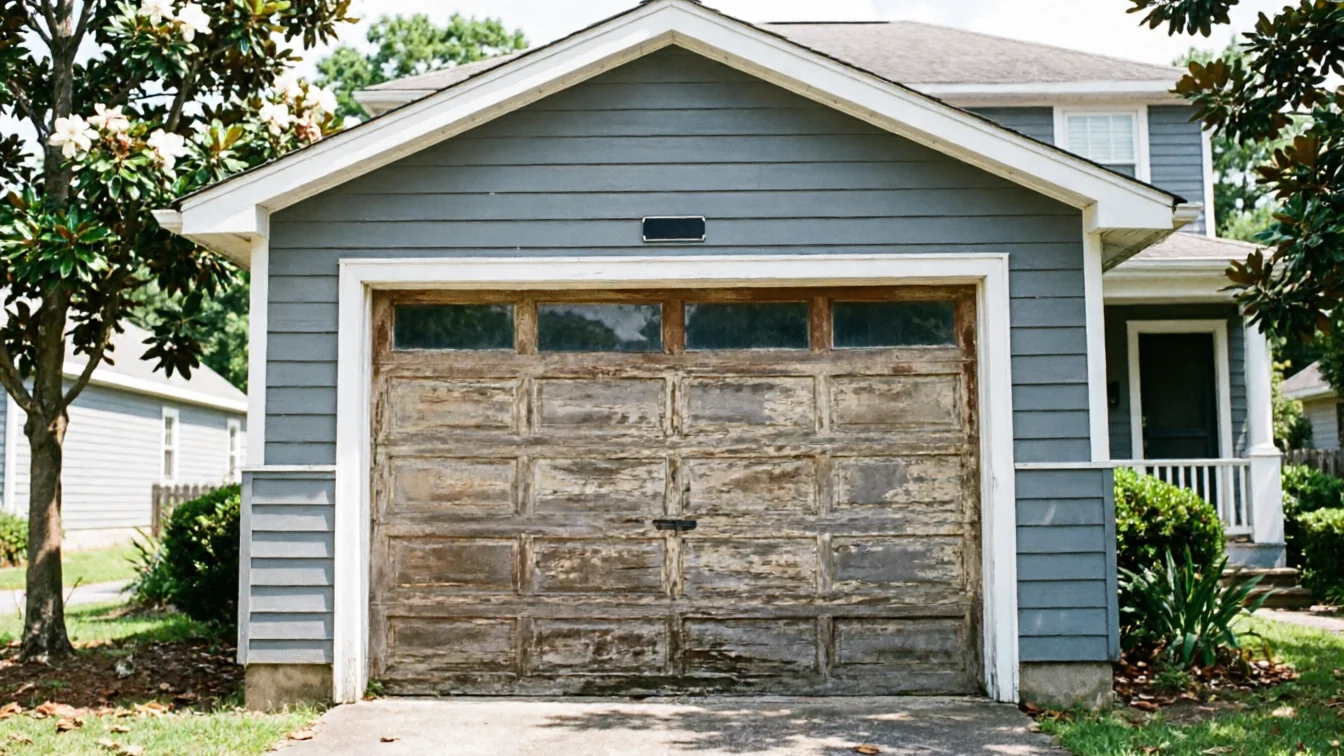 Is Your Marietta Garage Door Worth Fixing or Should It Go
Marietta homes mostly date to the 1980s and 90s.
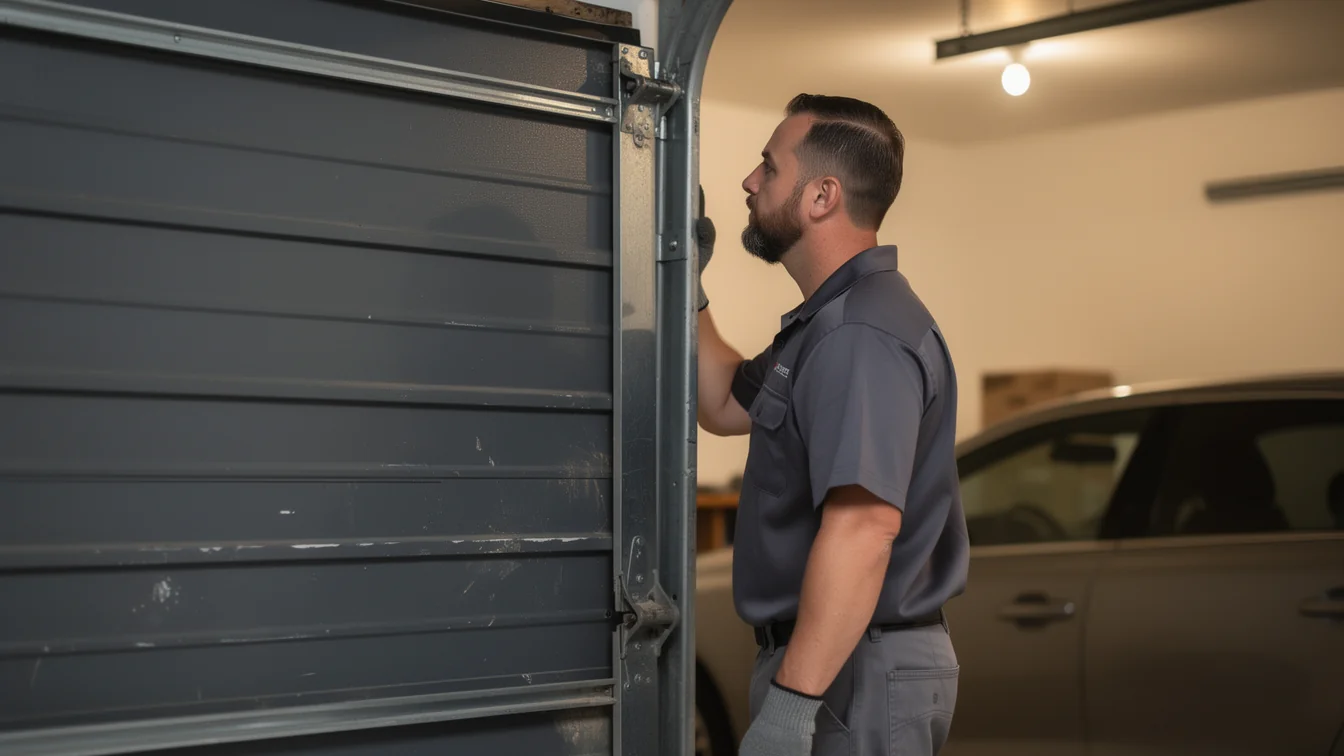 What Those Clunks and Grinds Are Telling You About Your Marietta Garage Door
What a grinding, popping, or rattling garage door means for homes built across Marietta's 1964-2007 housing stock, and why the cold-moderate climate changes the diagnosis.
Ready when you are
Need a garage door sorted in Marietta?
Marietta Garage Door Co repairs and installs garage doors, springs and openers in Marietta, GA and the surrounding area.