Why This Fails Locally
Most of the housing stock across this service area went up between 1964 and 2007, with the median build year sitting around 1984. That means a lot of garage doors on the road right now are still riding on the steel rollers they shipped with three or four decades ago. Steel rollers were standard through the 1980s and into the 90s, and they do fine for years - until the galvanized coating wears through and the roller starts grinding bare metal against the track.
The climate here doesn't help. This corridor sits in a cold-moderate band, which means the track metal contracts in winter and expands again through the warmer months. That cycle opens up tiny gaps between roller and rail, and a roller that's already worn thin starts chattering, binding, or jumping the track edge. On a door that's original to a house built in the 80s or 90s, that wear is already baked in - you're not dealing with a defect, you're dealing with age plus thermal cycling doing exactly what it does.
Across the eighteen communities in this part of the corridor, from Fair Oaks a couple miles out to Clarkston twenty miles the other direction, that same housing wave shows up over and over. Different streets, same roller problem.
What the Fix Involves
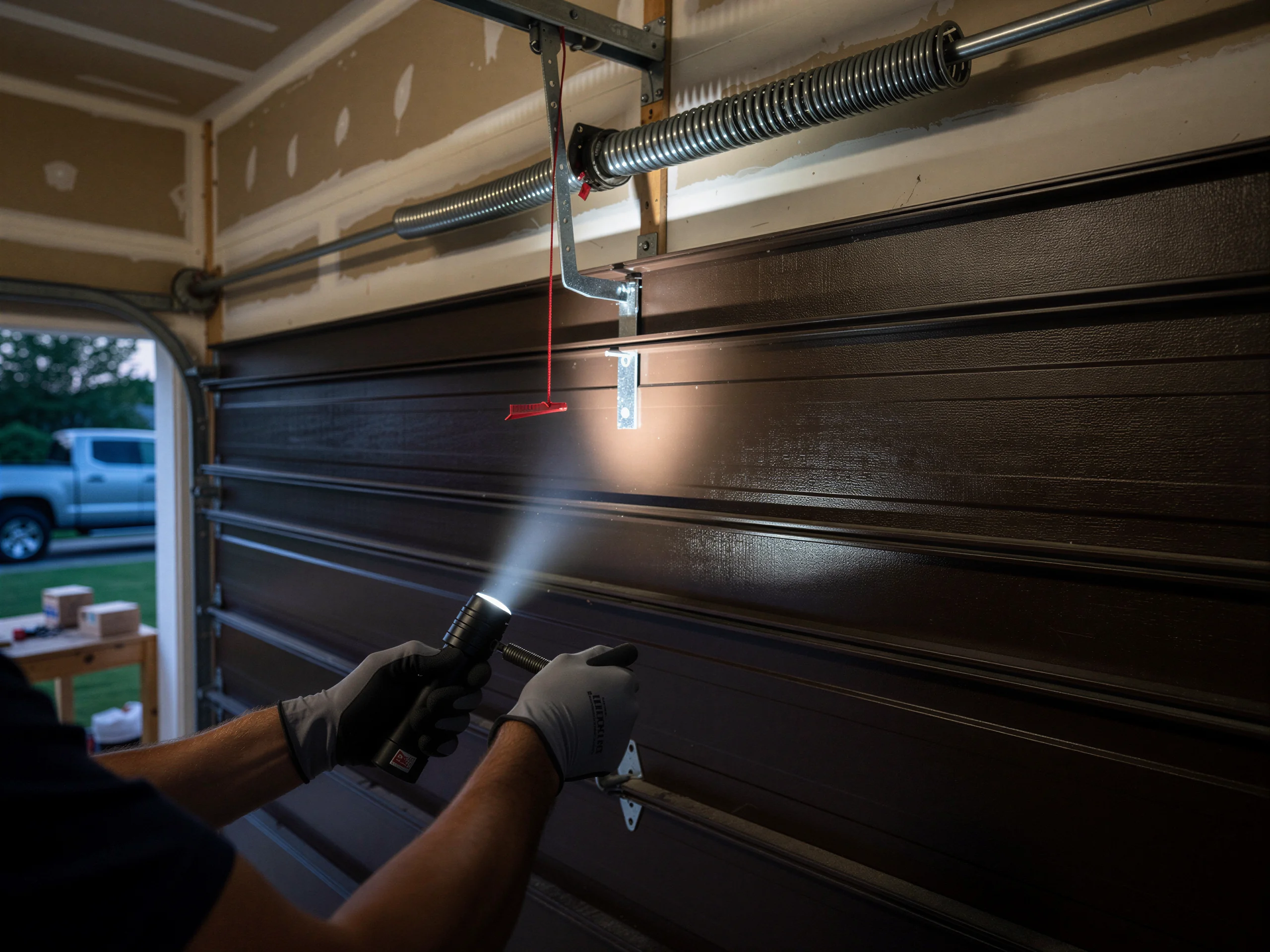
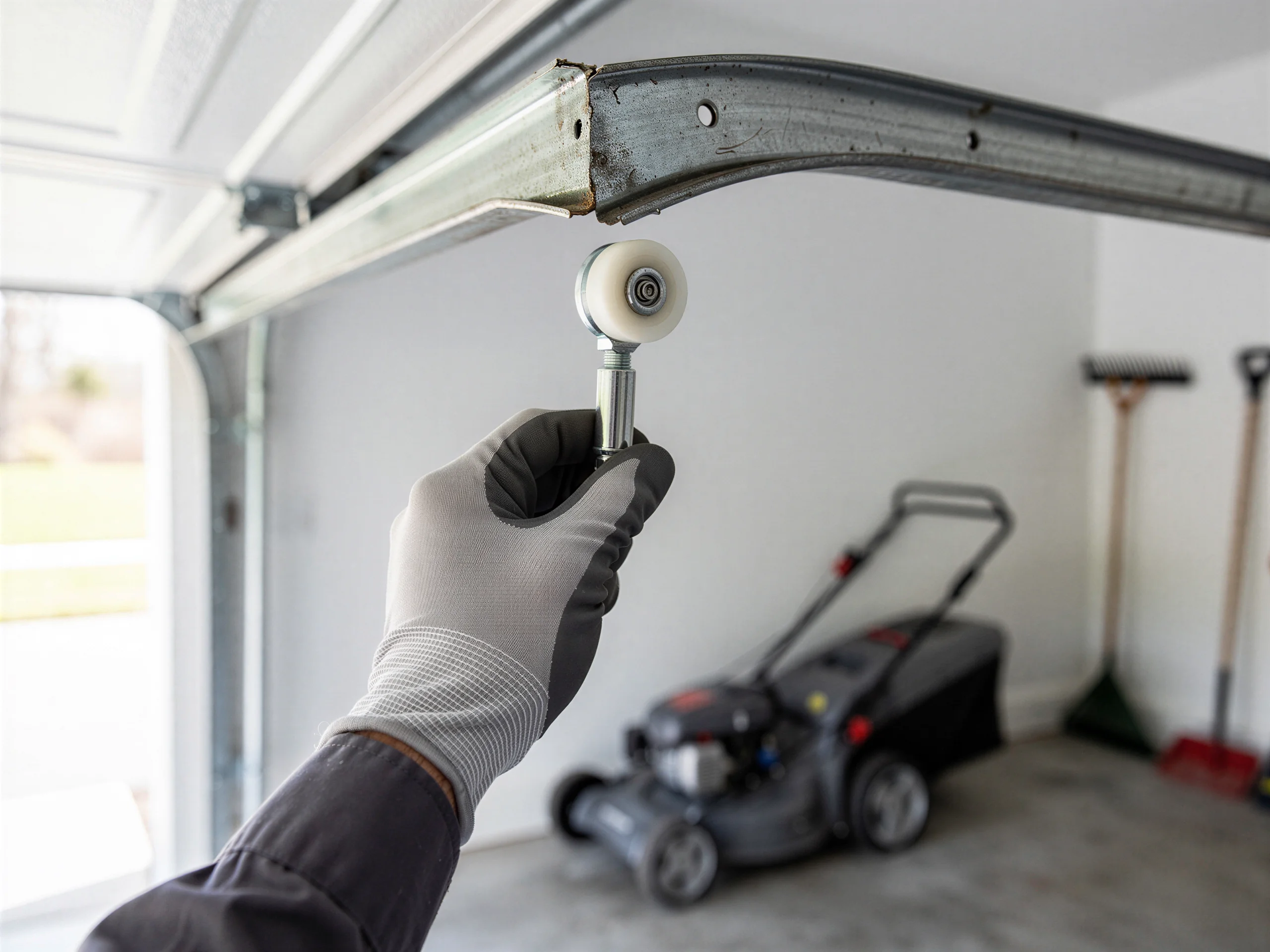
We pull the old rollers - usually steel, sometimes early nylon - and check the stems and bearings while the door is open and the springs are under control.
Seized stems and upgrades
A bent stem or a roller that's seized in its bracket tells you something about how the door's been running, so we look at that before we just swap parts. Most replacements go to nylon rollers with sealed ball bearings. They don't need the periodic lubrication steel rollers do, and they run quieter, which matters in a cold-moderate climate where metal-on-metal contact gets louder as the track contracts in winter.
Track fixed alongside rollers
If the track itself is bent or worn from years of a bad roller grinding against it, that gets straightened or replaced at the same time - a new roller in a damaged track just wears out again in a season or two. We check all the rollers on the door, not just the one that's squeaking.
Pair rollers together
If one roller near the bottom bracket is shot, the one across from it on a door that's been running since the 80s or 90s is usually not far behind. Swapping one and leaving a near-failed one in place just means a second call a few months later, and that's not a good use of anyone's time or money.
Time on the Job
A straight roller swap on a standard double or single door, with no track damage, is a shorter job than people expect - most of the time goes into checking balance and making sure the door still travels true once new rollers are in. If a track needs straightening or a bracket has to come off, that adds time.
We can't give you a number without looking at the door, because a roller job on a door that's been limping along with a bad roller for months can turn up a bent track, worn hinges, or a cable that's frayed from rubbing against a misaligned roller. That's the honest limitation here: a roller replacement that looks simple on the phone sometimes turns into more once we're standing in front of the opened door. We'll tell you before we touch anything extra, not after.
What You Are Seeing
A grinding or scraping noise right as the door passes a certain point in the track is usually a roller with worn bearings, not a spring problem.
Hesitation at one spot
If the door hesitates or jumps slightly at the same spot every time, that's a roller catching on a dent or a seam in the track rather than sliding through it clean. Flat spots on the roller - you can sometimes see this if you look closely at the roller while the door is moving slowly - mean the roller has stopped turning and is dragging instead.
Rising noise over years
That wears the track faster and makes the noise worse over time. Doors that have gone quiet-to-loud over a year or two, especially ones that have never had the rollers touched since they were installed, are the ones we see most in this cold-moderate climate where the metal-on-metal wear compounds every winter.
Shaking or derailed roller
If the door is shaking visibly as it travels, or a roller has actually come off its track, that's worth a call sooner rather than later - a derailed roller can bend the bracket or stress the cable on the next cycle.
Talk to a local pro
Garage door service in Marietta?
Same-day service with honest, upfront quotes.