Why This Fails Locally
Most houses in Marietta's service area went up between 1964 and 2007, with the median build year sitting around 1984. That means a lot of garages still run the torsion springs, steel tracks, and openers that came with the house, or a first-generation replacement from the 1990s. Across the 18 named areas we cover, that stock skews heavily toward 1980s and 90s construction, which used lighter-gauge track and single-point cable drums that were standard for the era but aren't built for 30-plus years of cycles.
Then there's the climate. Marietta sits in a cold-moderate band, which means real freeze-thaw swings through winter and humidity load the rest of the year. That combination is hard on galvanized torsion springs - the coating wears thin faster than it would in a dry climate, and the metal fatigues at the stress points first. On a door that cycles twice a day, a spring rated for a certain number of cycles in a mild climate gets there sooner here.
So the common failure we see isn't random. It's a 30-to-40-year-old spring or a worn cable drum on a door that's been doing the same job since the Reagan administration, finally giving out under conditions it was never spec'd for.
What the Fix Involves
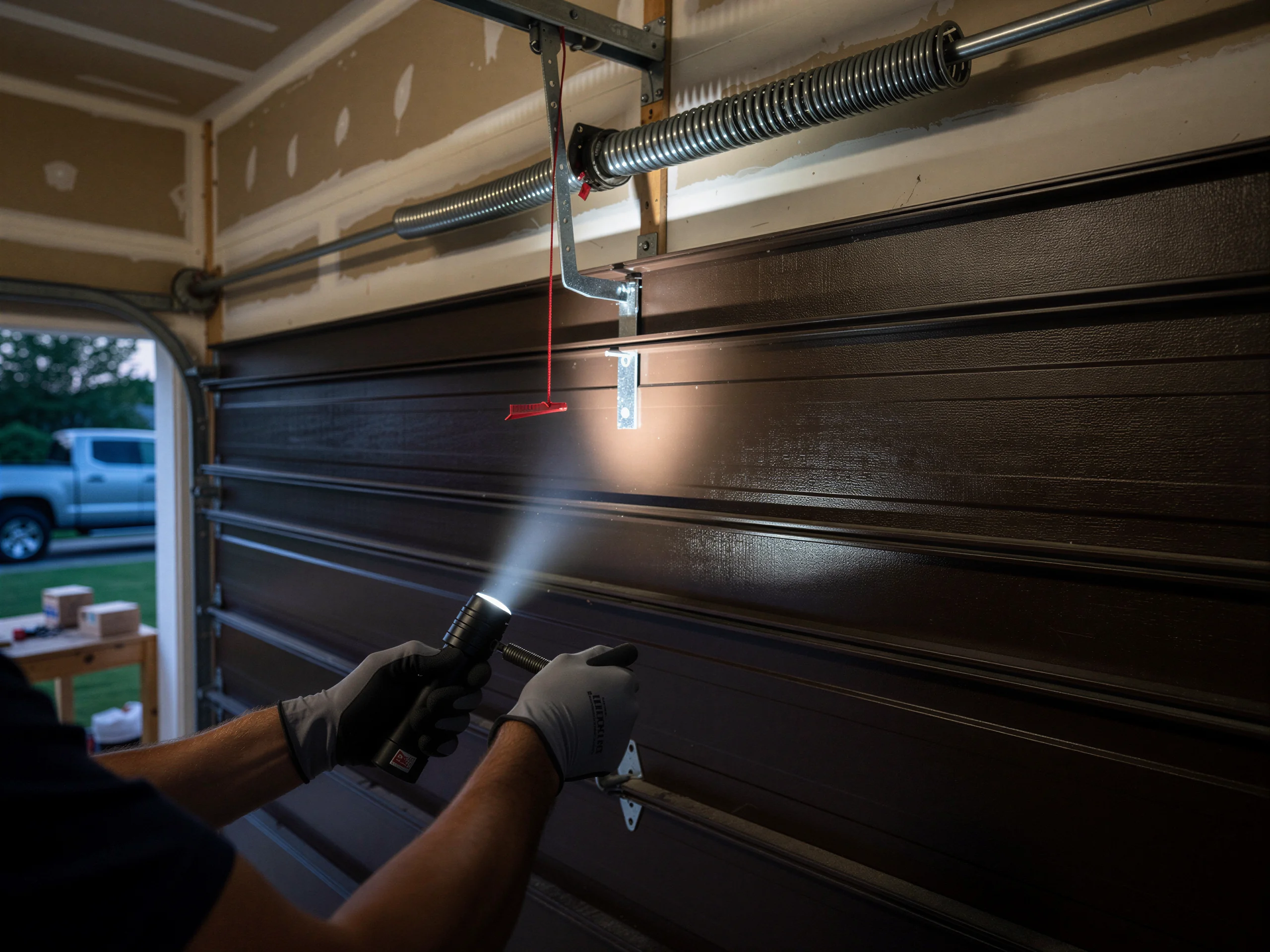
For a spring failure, the job is pulling both torsion springs as a pair - even if only one has broken, the other is the same age and close behind - and setting new ones matched to the door's weight and the drum size on the shaft.
Checking mixed hardware generations
On houses from the 1964-2007 window, we're often working with a mix of hardware generations if a door was replaced once already, so we check the drum, the shaft diameter, and the track gauge before ordering parts rather than assuming a standard kit fits.
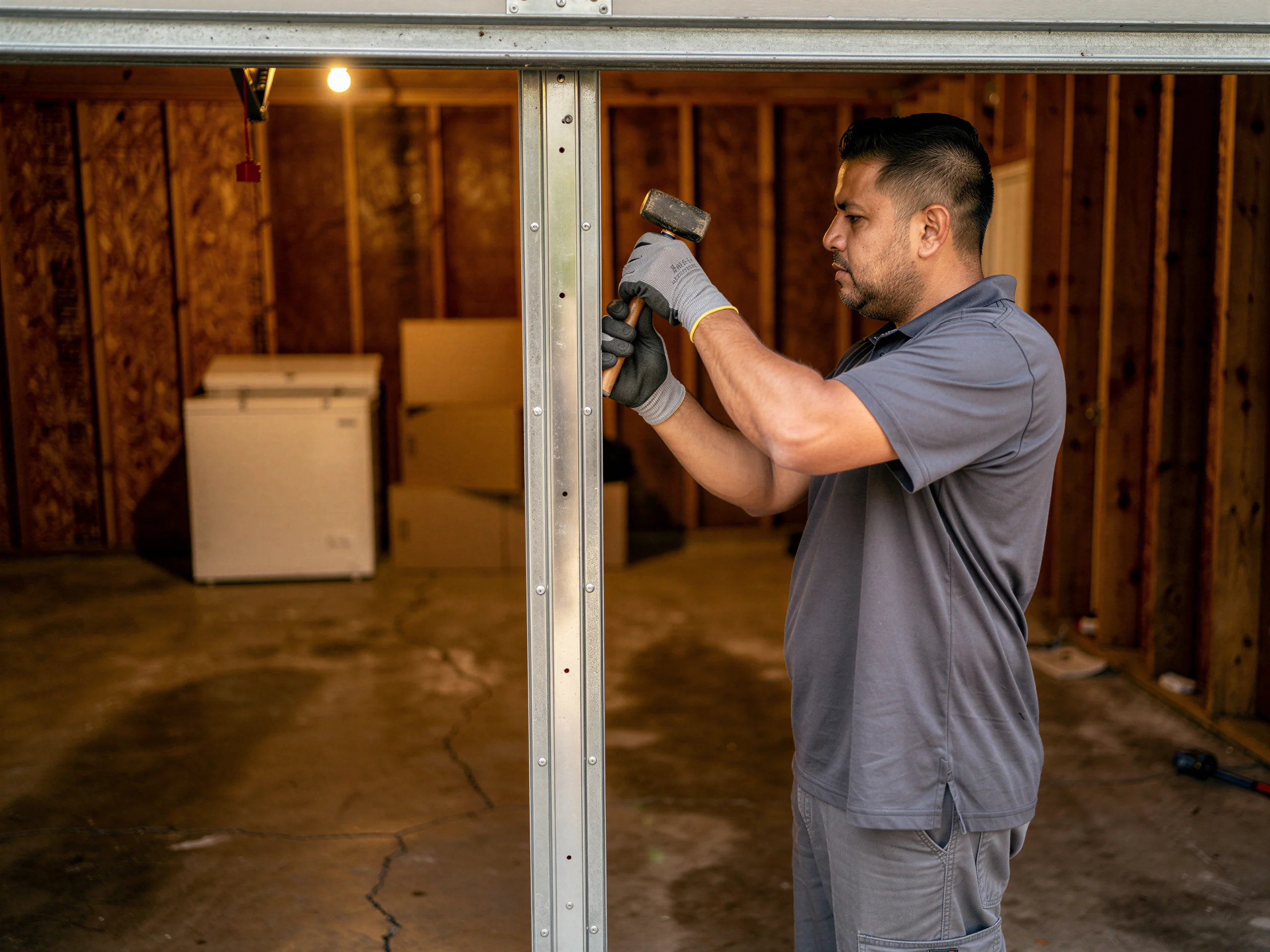
True or replace track sections
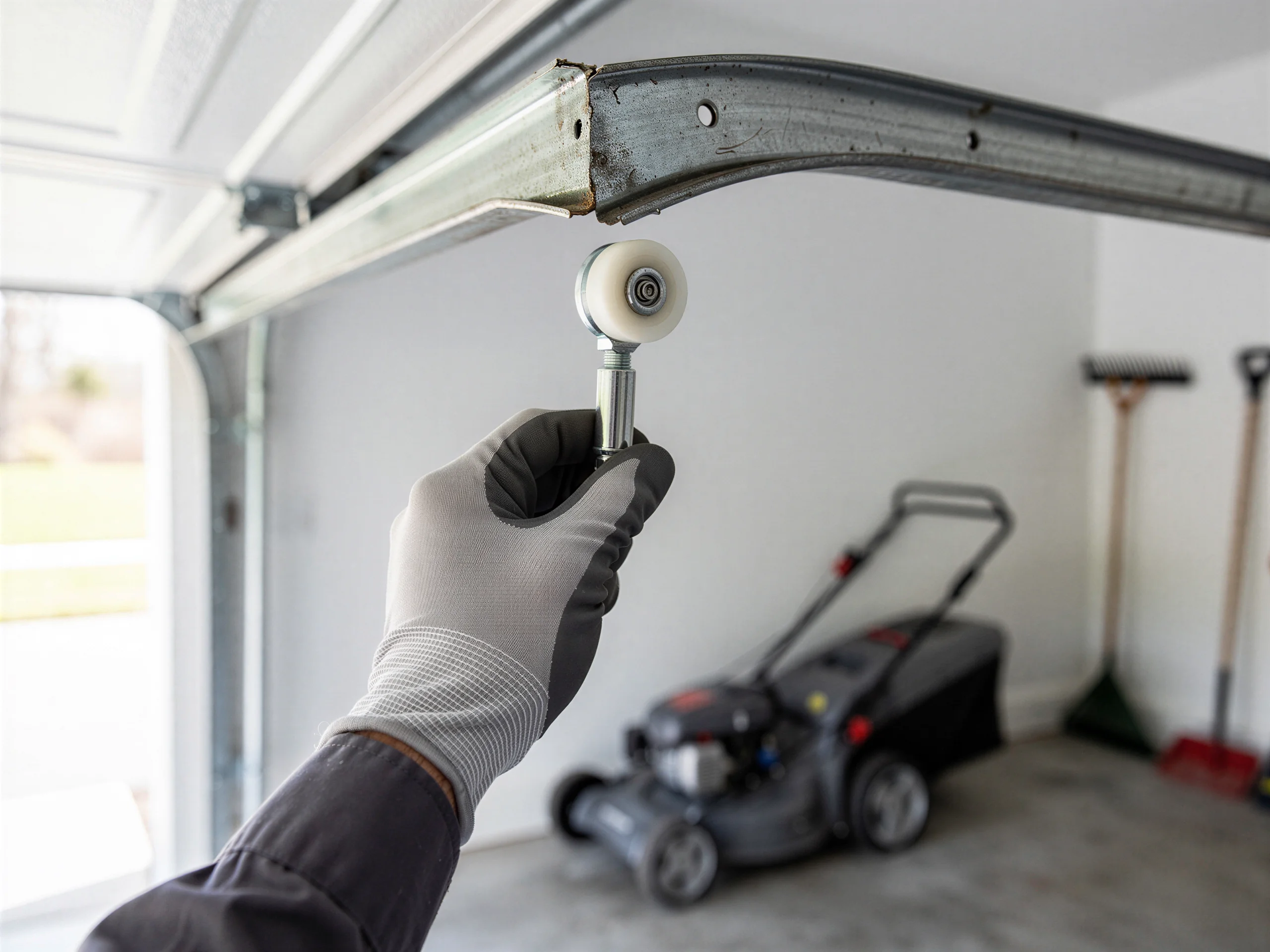
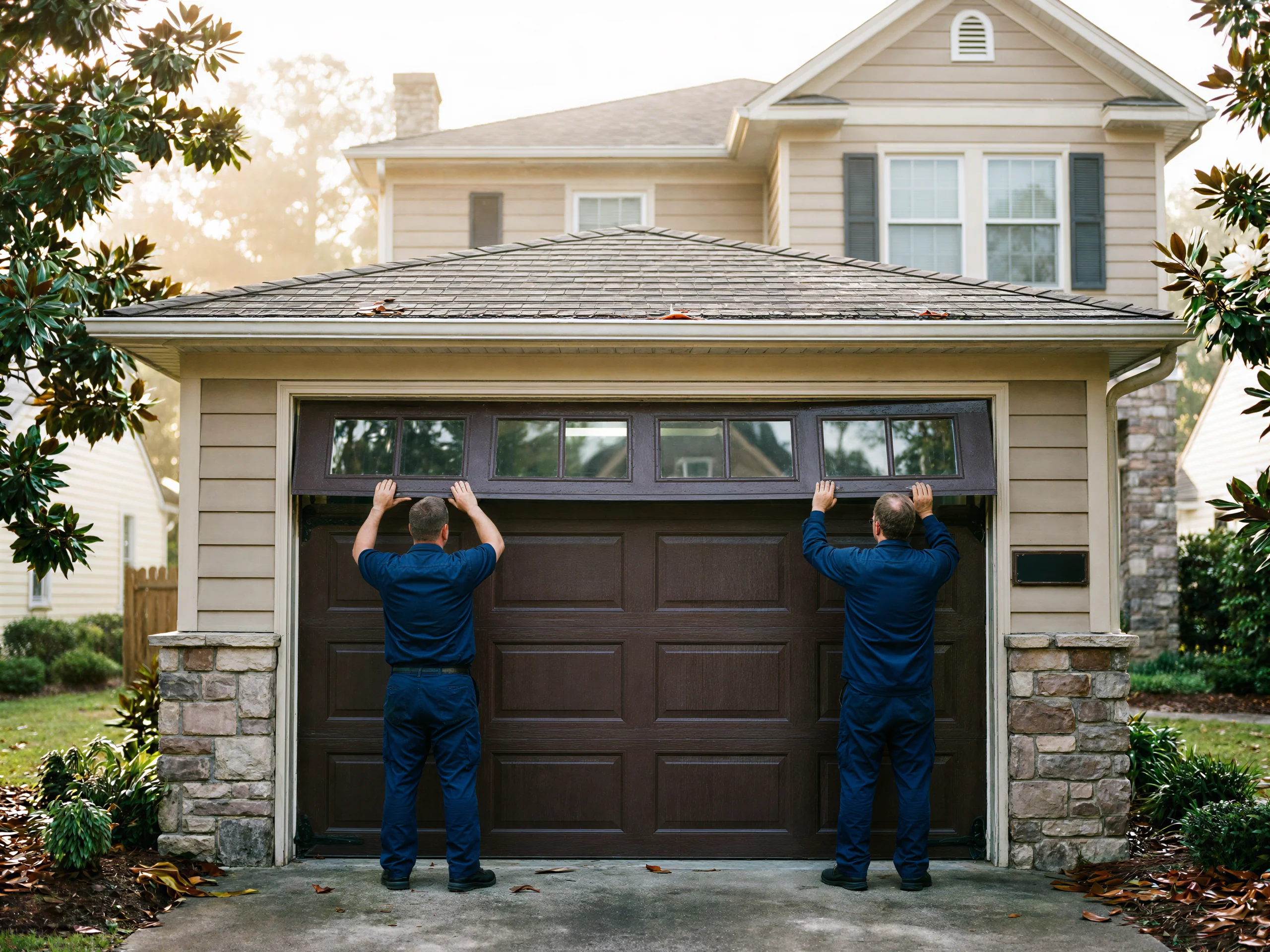
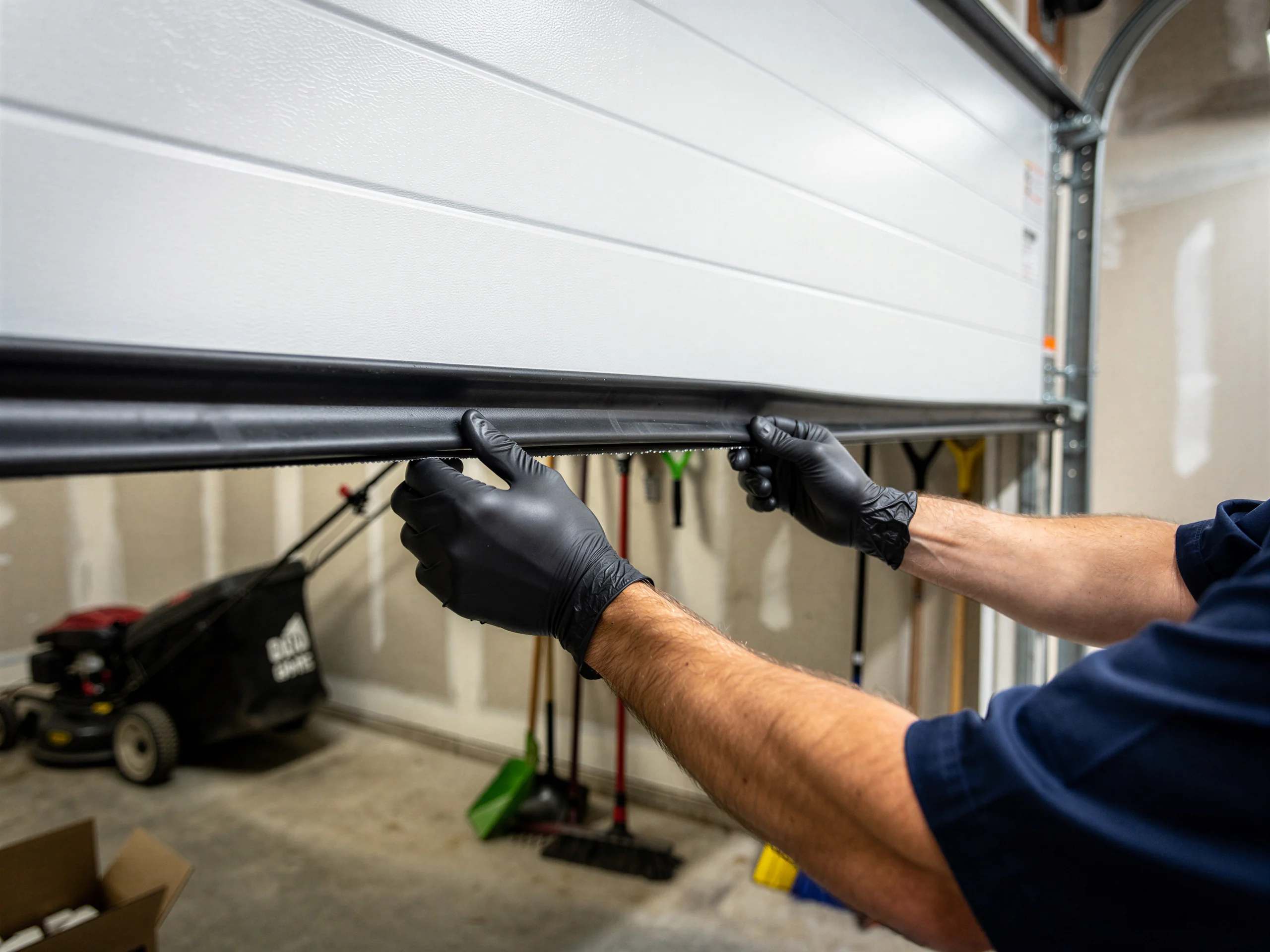
If the track is bent or the rollers are shot - common on doors that have had one slow-motion fender bump over 30-plus years - we true or replace the horizontal and vertical sections rather than just swapping rollers, because a roller riding in a warped track will wear out again in a year.
Delaminated or rotted panels
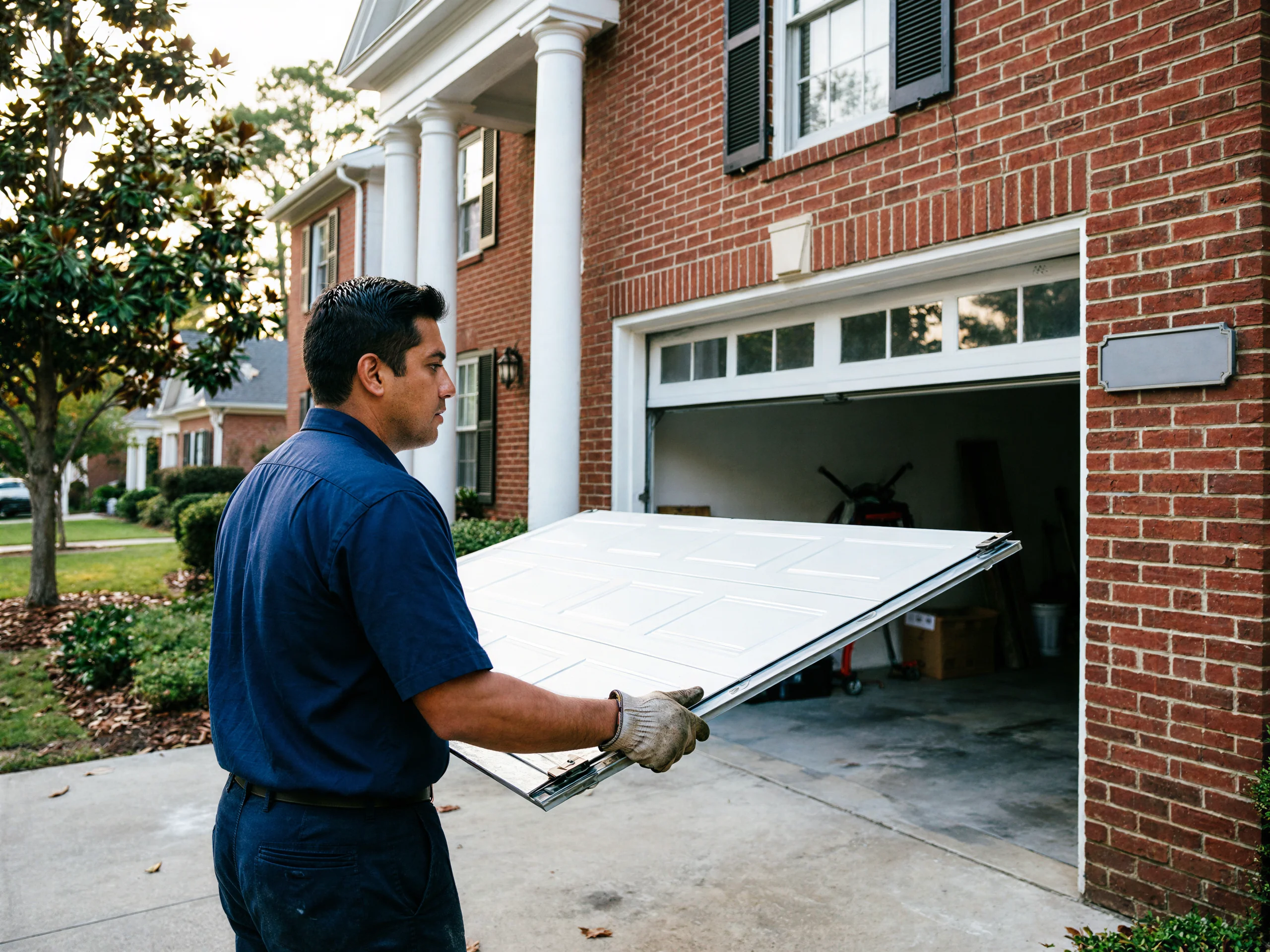
One honest limit here: if the door itself has delaminated panels or rotted wood from years of humidity exposure, replacing the spring or track doesn't fix the underlying problem. At that point we'll tell you straight that a new door section, or the whole door, is the better spend than another round of hardware repair.
Time on the Job
A straight torsion spring replacement on a double door runs about the same regardless of which decade the door came from, since the work is mechanical, not diagnostic. Track and roller work takes longer when the bends are old and the roller channel is worn unevenly, which we see more often on doors from the earlier end of the 1964-2007 range that have never had the track checked.
We don't stock every opener gear kit or every spring size on the truck, since houses across the 18 areas we serve run different drum sizes depending on which decade they were built or last replaced. If your door needs a less common size, that's a short order delay, not a same-day job, and we'd rather tell you that up front than promise a fix we can't deliver that afternoon.
What You Are Seeing
The door that won't open past a few inches, or drops fast on the way down, is almost always a broken or fatigued torsion spring - the door is too heavy to lift or control without it.
Shuddering from worn rollers
A door that opens fine but shudders or binds partway up usually points to a bent track section or rollers that have worn out of round, which is more common on the older end of Marietta's 1964-2007 housing stock where the original track has never been replaced.
Loud bang, spring failure
A loud bang followed by the door refusing to move at all is a spring that's let go completely - don't run the opener again until it's replaced, since you can strip the gears trying to force a door that's lost its counterbalance.
Strain from worn cable
If the door moves but the opener motor strains or trips its breaker repeatedly, that's more often a worn drum cable or a spring that's lost tension gradually rather than snapped, which happens slowly enough that homeowners sometimes run it for weeks before calling.
Talk to a local pro
Garage door service in Marietta?
Same-day service with honest, upfront quotes.