Why This Fails Locally
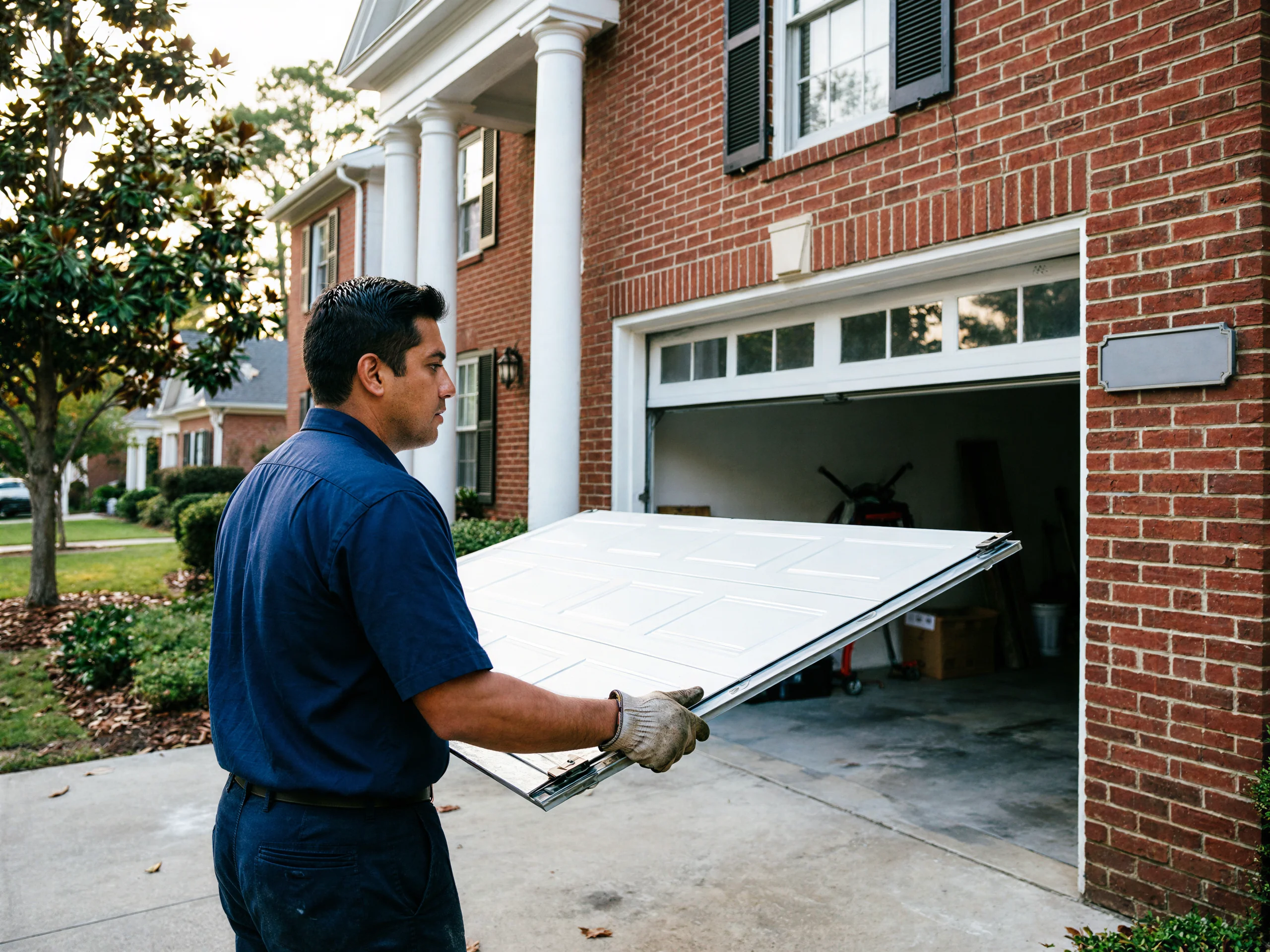
Most of the housing across this service area went up between 1964 and 2007, with the median build year sitting around 1984. That matters because a door installed in the early-to-mid 1980s is now 40 years into a mechanism that was never meant to run maintenance-free that long. Torsion springs lose tension gradually, not all at once, so a door that worked fine last winter can snap a cable this winter with no warning.
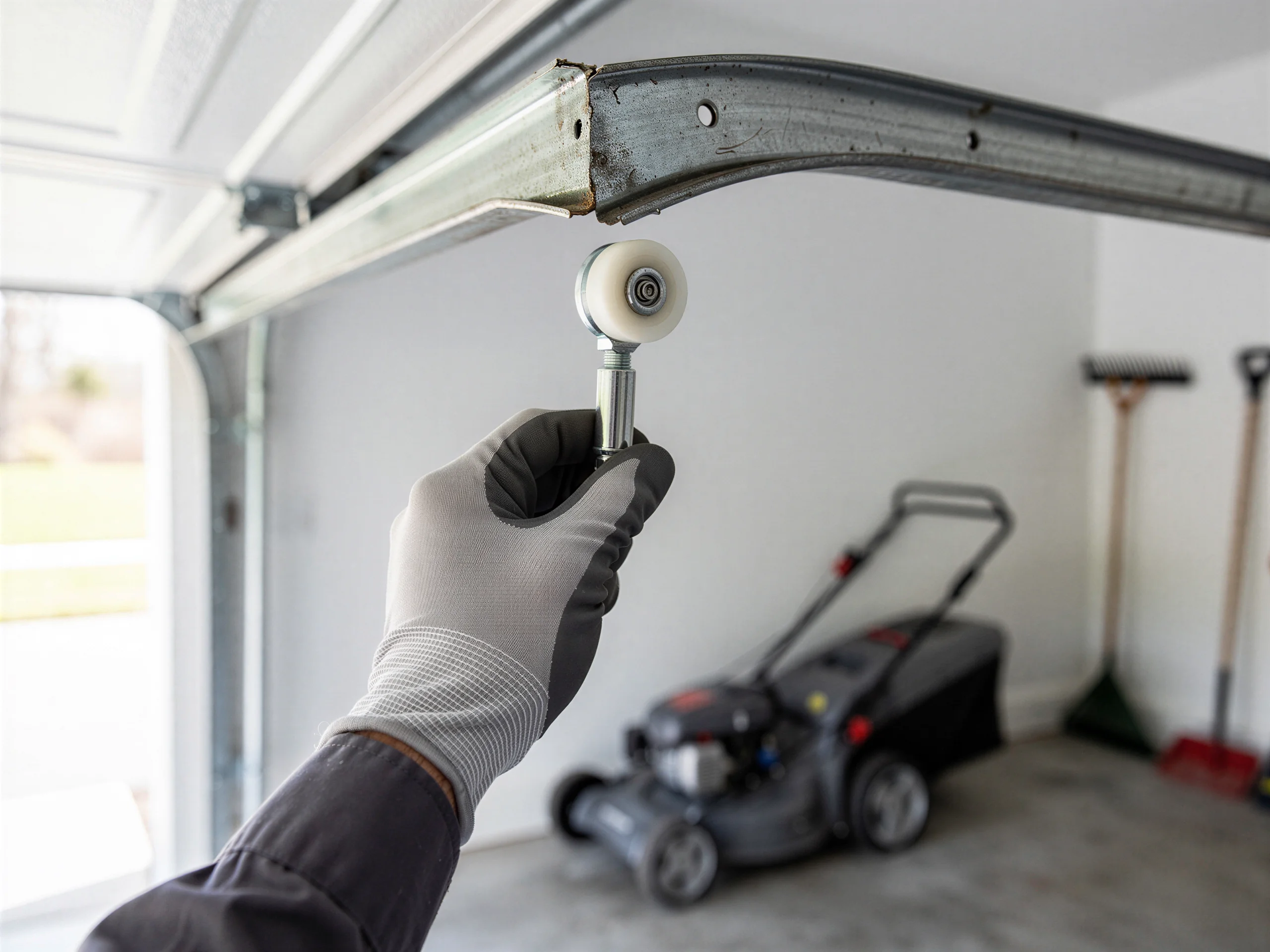
Across the 18 named communities in this service area, the bulk of the stock dates to the 1980s and 90s, which is exactly when steel panel doors with sealed, non-serviceable rollers became the standard builder-grade install. Those rollers were never designed to be greased or swapped individually - when they go, the whole track binds.
Add the cold-moderate climate band this region sits in and you get a second failure path: grease inside the opener gearbox and spring coil stiffens in cold mornings, metal contracts, and weatherstripping that was already brittle from UV exposure cracks and lets in drafts. None of this shows up as a dramatic breakdown. It shows up as a door that's 10% slower, 10% noisier, and 10% more likely to leave you stuck halfway open on a cold morning.
What the Fix Involves
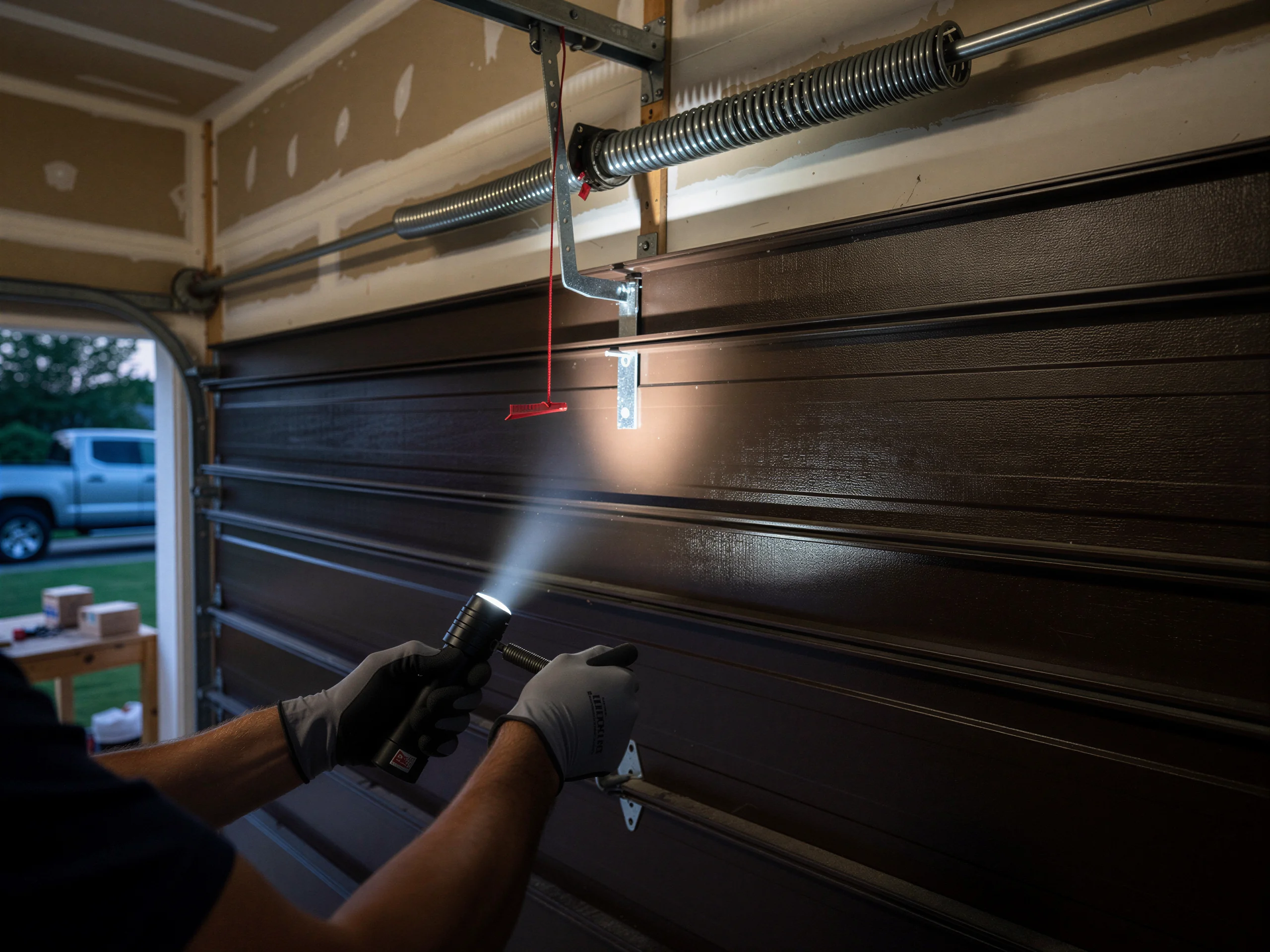
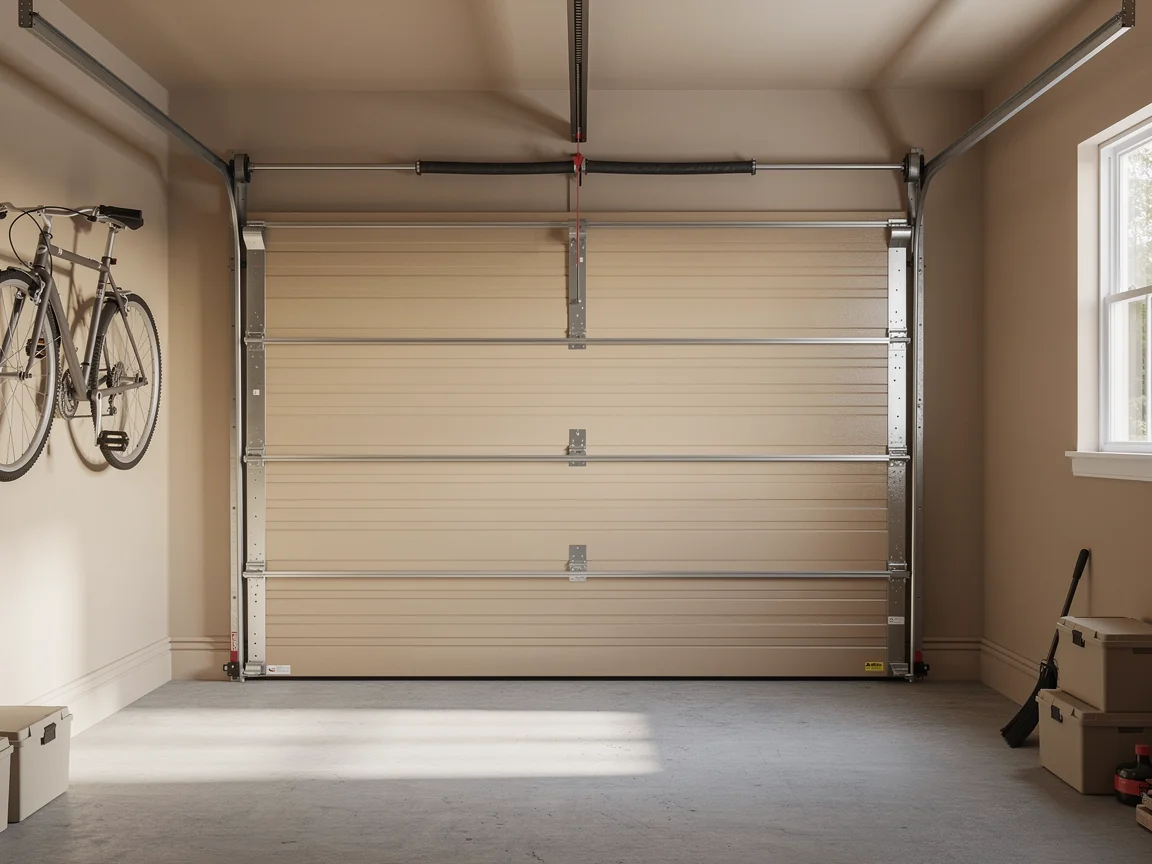
A real maintenance visit isn't just a spray of WD-40 on the tracks. It starts with checking spring tension against the door's actual weight - original torsion springs from a 1980s or 90s build are almost always undersized for the heavier insulated panels many owners have since swapped in, and that mismatch is what burns out openers early.
Alignment and limit drift
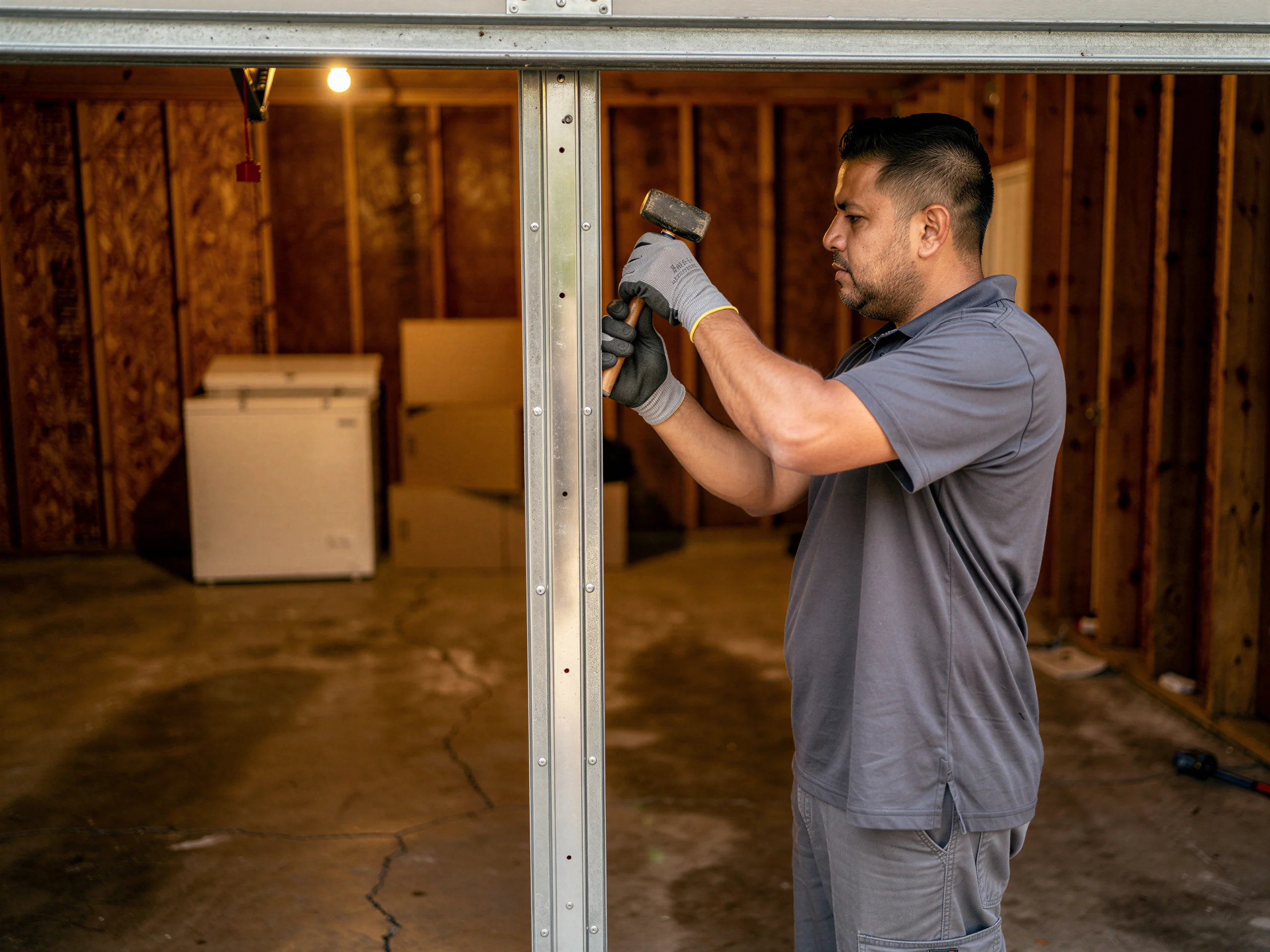
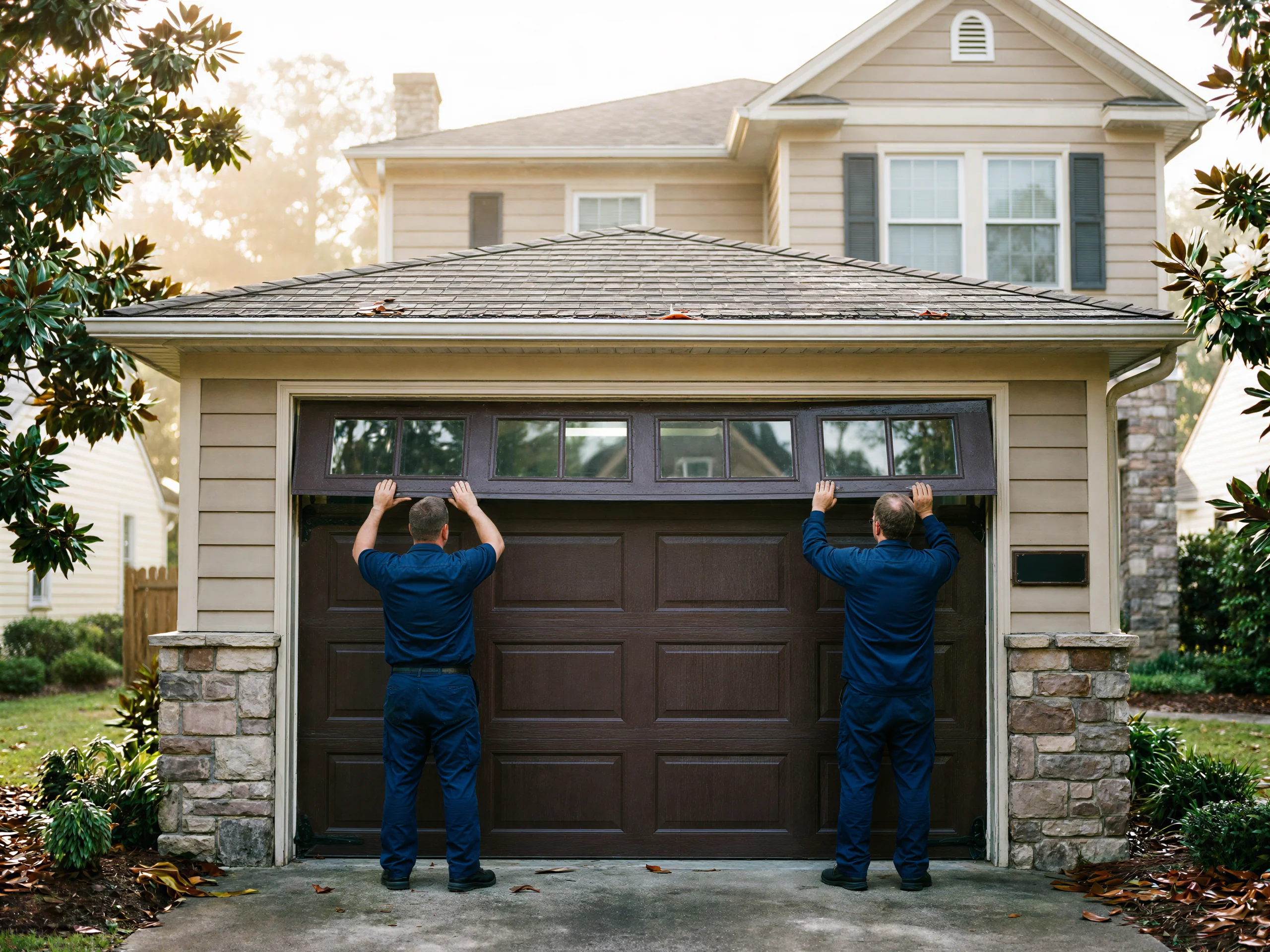
From there: track alignment (gaps that have widened from decades of house settling), roller inspection, cable wear at the drum, hinge tightening, and a check of the opener's limit and force settings, which drift over time and cause doors to reverse or slam.
Seals and proper lubricant
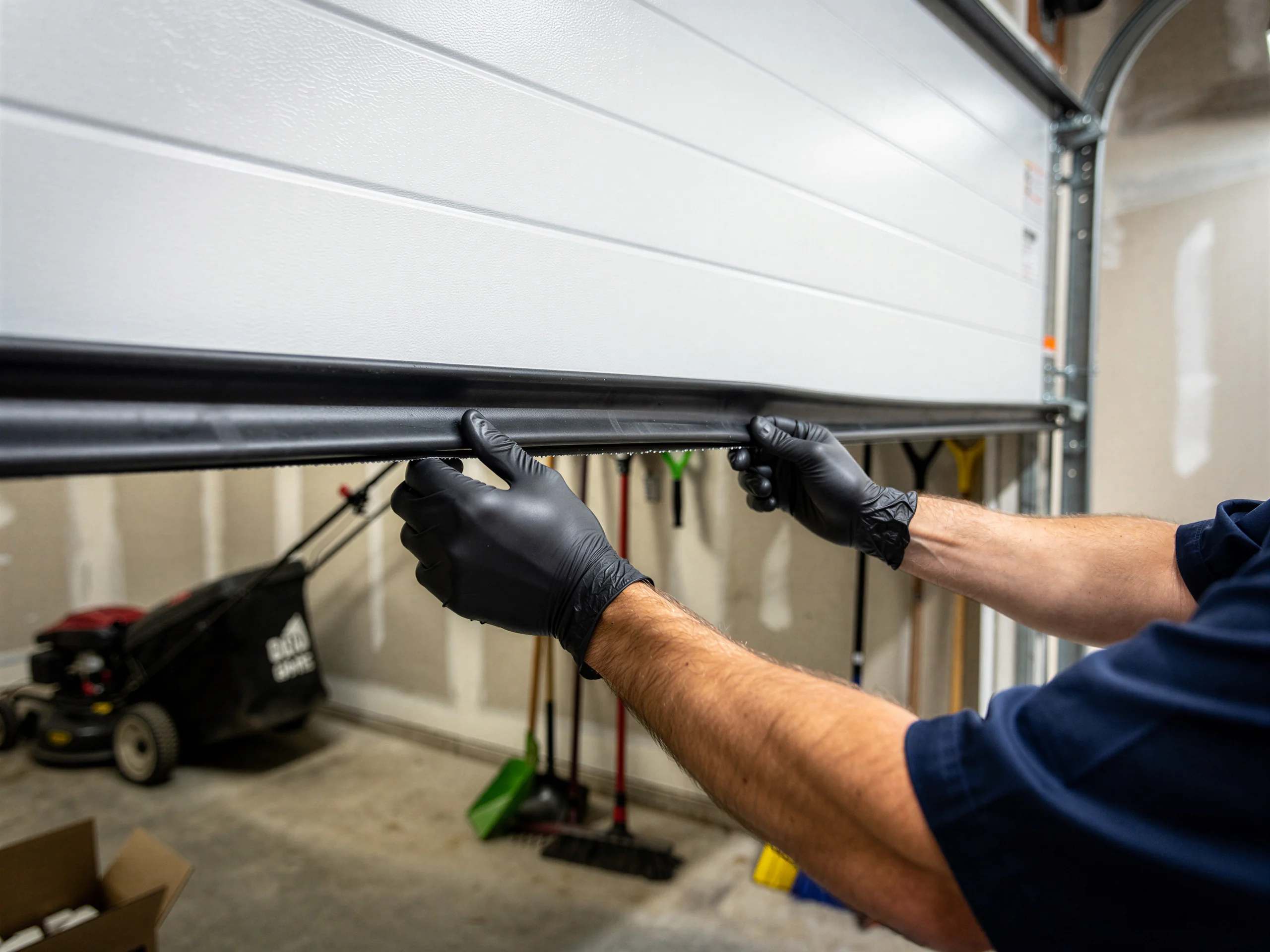
In this climate band, we also check weatherstripping and bottom seal condition, since cold-season cracking is a steady source of service calls, not a one-time fix. We lubricate with the right product for metal-on-metal contact, not a general household spray, which gums up with grit and makes things worse within a season.
Replacing, not tuning springs
One honest limit here: if a spring is original to a 1980s install, we're not going to "tune" it back to spec - at that age it gets replaced, not adjusted. Trying to extend a 40-year-old spring with lubricant alone is a liability, not a fix.
Time on the Job
A standard maintenance visit covers the full door - springs, track, rollers, cables, hinges, opener settings, and weatherstripping - not just the parts making noise.
Time varies with age
How long any one item takes depends on what the last 20 to 40 years did to the hardware, which varies a lot across a service area built mostly between 1964 and 2007.
Neglect slows inspection
A door that's been kept up with occasional lubrication moves faster through inspection than one where rust has set into the track bolts or the spring coil has corroded from years of winter condensation. We don't pad the visit with upsells, but we also don't rush past a cable that's fraying just to hit a target time.
Parts needing a second trip
The honest limitation: if we find a part that needs ordering - a specific roller size, a spring rated for a heavier insulated retrofit panel - that's a second trip, not a same-visit fix. We'd rather tell you that up front than leave a half-finished repair on a door you rely on every day.
What You Are Seeing
The signs that bring most owners in this service area to call are consistent with the age of the stock: a door that groans or shudders partway through its travel, a remote that works some mornings and not others, a bottom seal that's visibly cracked and letting in cold air, or a door that reverses on its own before it touches the floor.
In homes built closer to the 1984 median, you'll often see a second pattern - the opener has been replaced once already, but the original springs and track never were, so the new motor is straining against 40-year-old hardware it wasn't matched to. That mismatch shows up as a door that's louder than it should be and an opener that runs hot.
If your door is sticking only on cold mornings and freeing up by afternoon, that's the cold-moderate climate band at work on stiff grease and a slightly misaligned track - a maintenance visit usually resolves it without needing a spring replacement.
Talk to a local pro
Garage door service in Marietta?
Same-day service with honest, upfront quotes.