Why This Fails Locally
Most of the housing across this part of metro Atlanta went up between 1964 and 2007, with the median home dating to 1984. That matters for track problems because a door riding on 30 to 50 year old hardware has been through decades of seasonal temperature swings. The climate here runs cold-moderate, which means winter nights cold enough to contract steel track and humid summer stretches that swell wood jambs the track is bolted to. Repeat that cycle for three or four decades and the lag screws holding the track brackets work loose a little more every year.
Across the 18 named communities in this service area, the bulk of the housing stock is 1980s and 90s construction, which lines up with a specific failure pattern: horizontal track runs that were leveled once, at install, and never touched again. A bracket that's loosened a quarter inch lets the door walk sideways on its rollers every time it cycles. It doesn't jump the track all at once - it works toward it over months, usually ending with a grinding noise and a door that hangs crooked on one side right before it comes off the rail.
Newer builds in the area see less of this simply because they haven't had the same number of freeze-thaw cycles yet to loosen the hardware.
What the Fix Involves
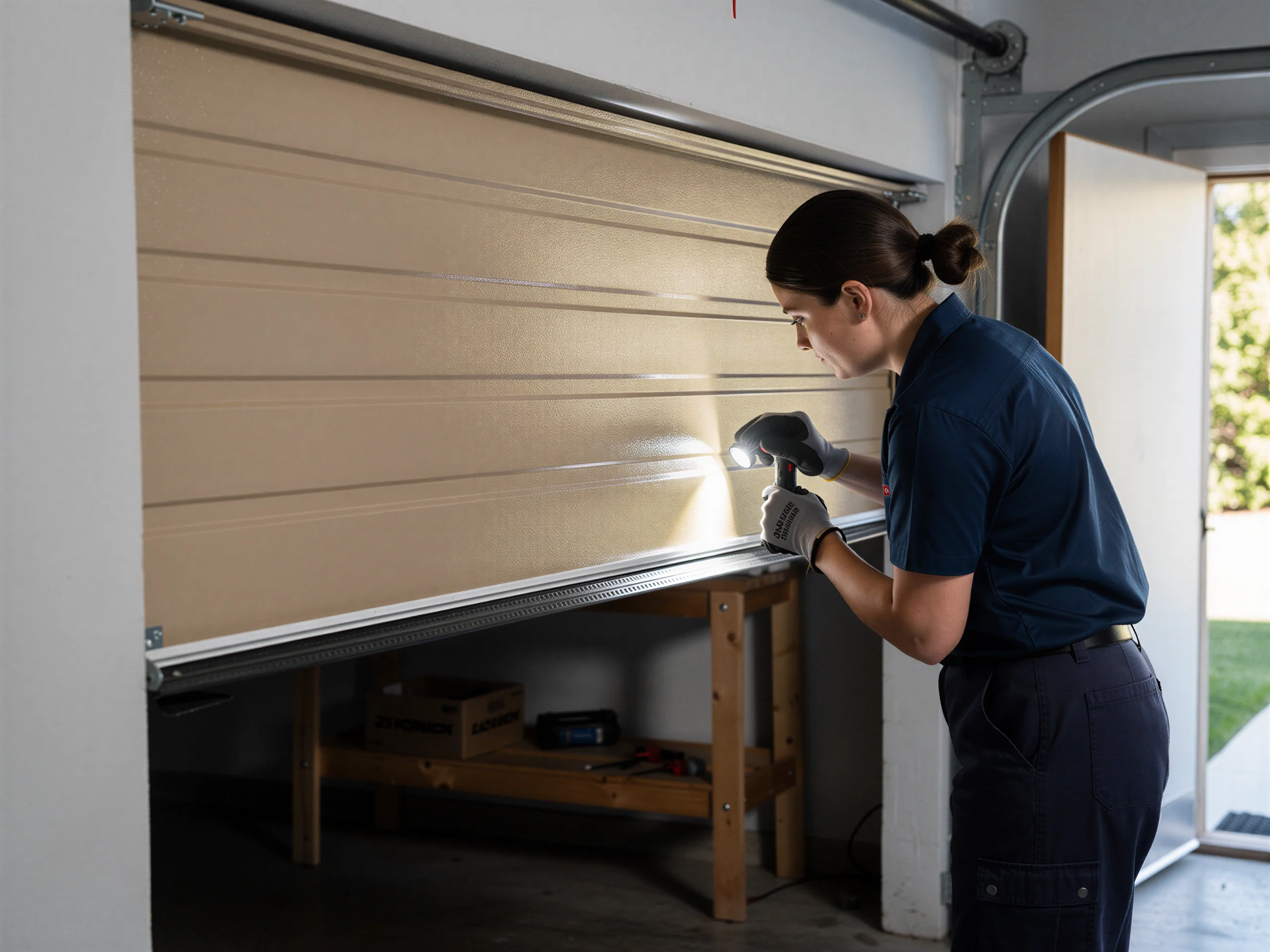
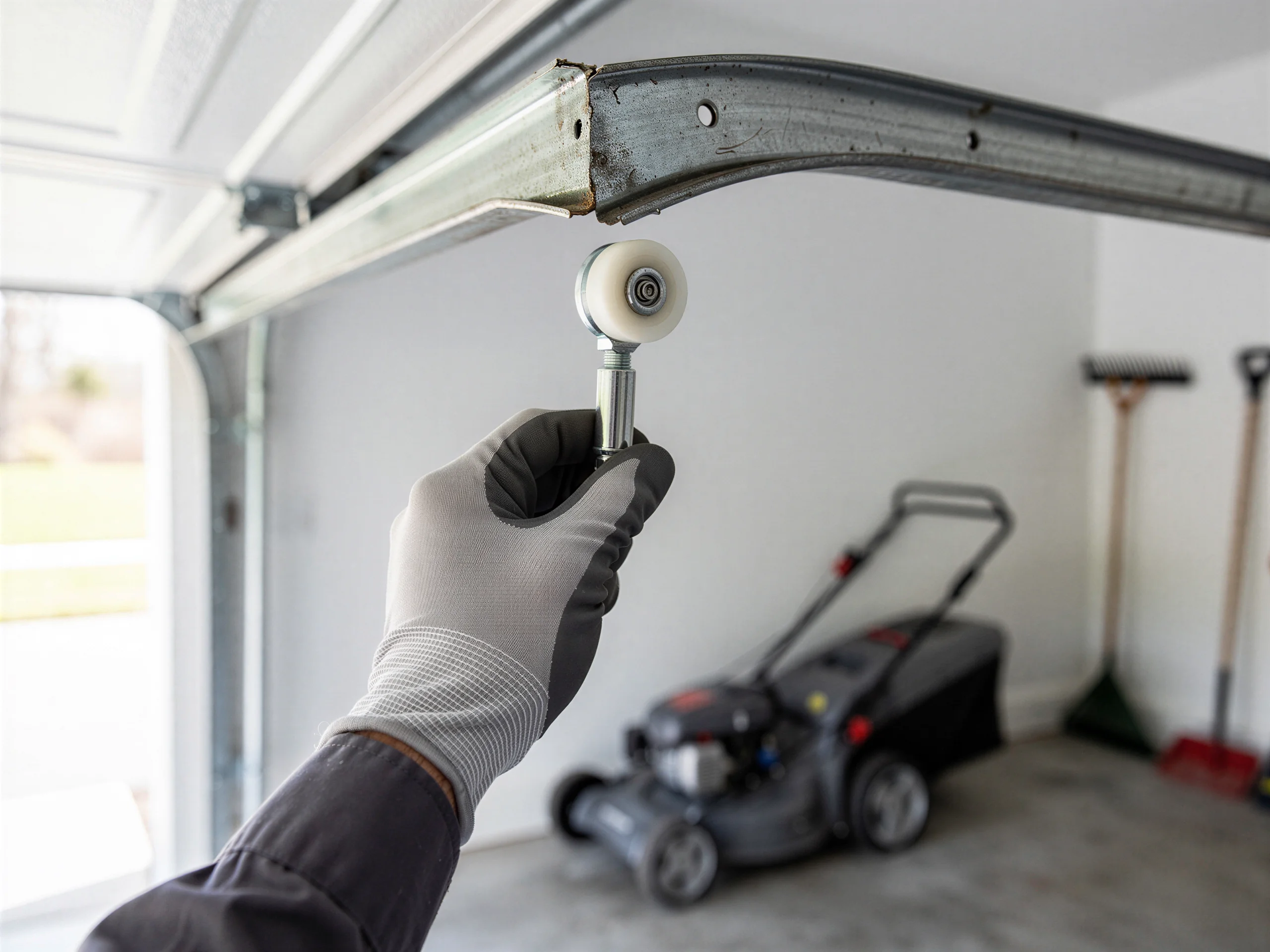
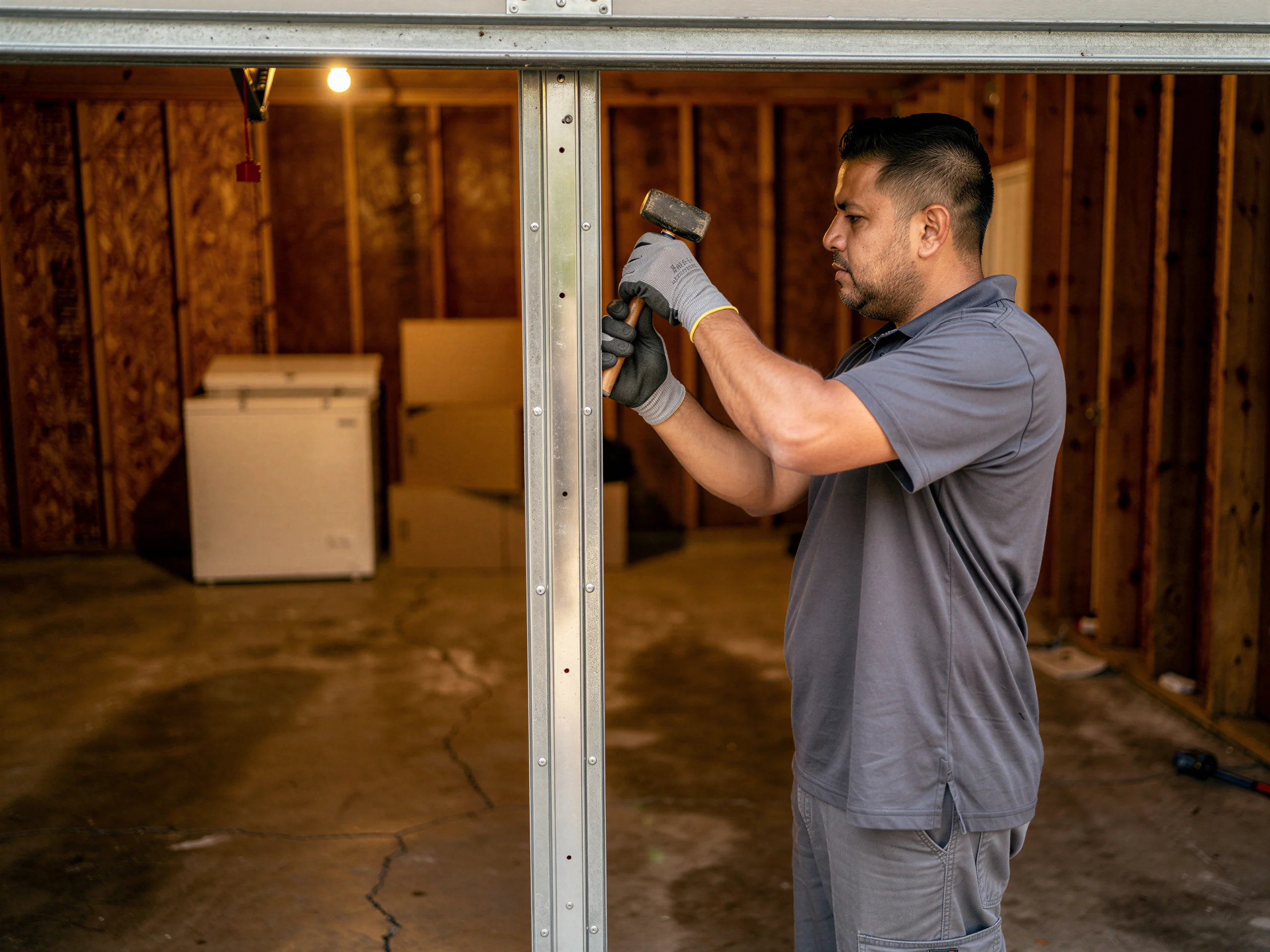
The job starts with figuring out whether the track is just out of alignment or actually bent. A track that's merely racked - brackets loose, rail pulled away from the jamb - gets reset: brackets re-anchored, track plumbed with a level, rollers checked for wear and replaced if they're chipped or flat-sided.
Bent track replaced outright
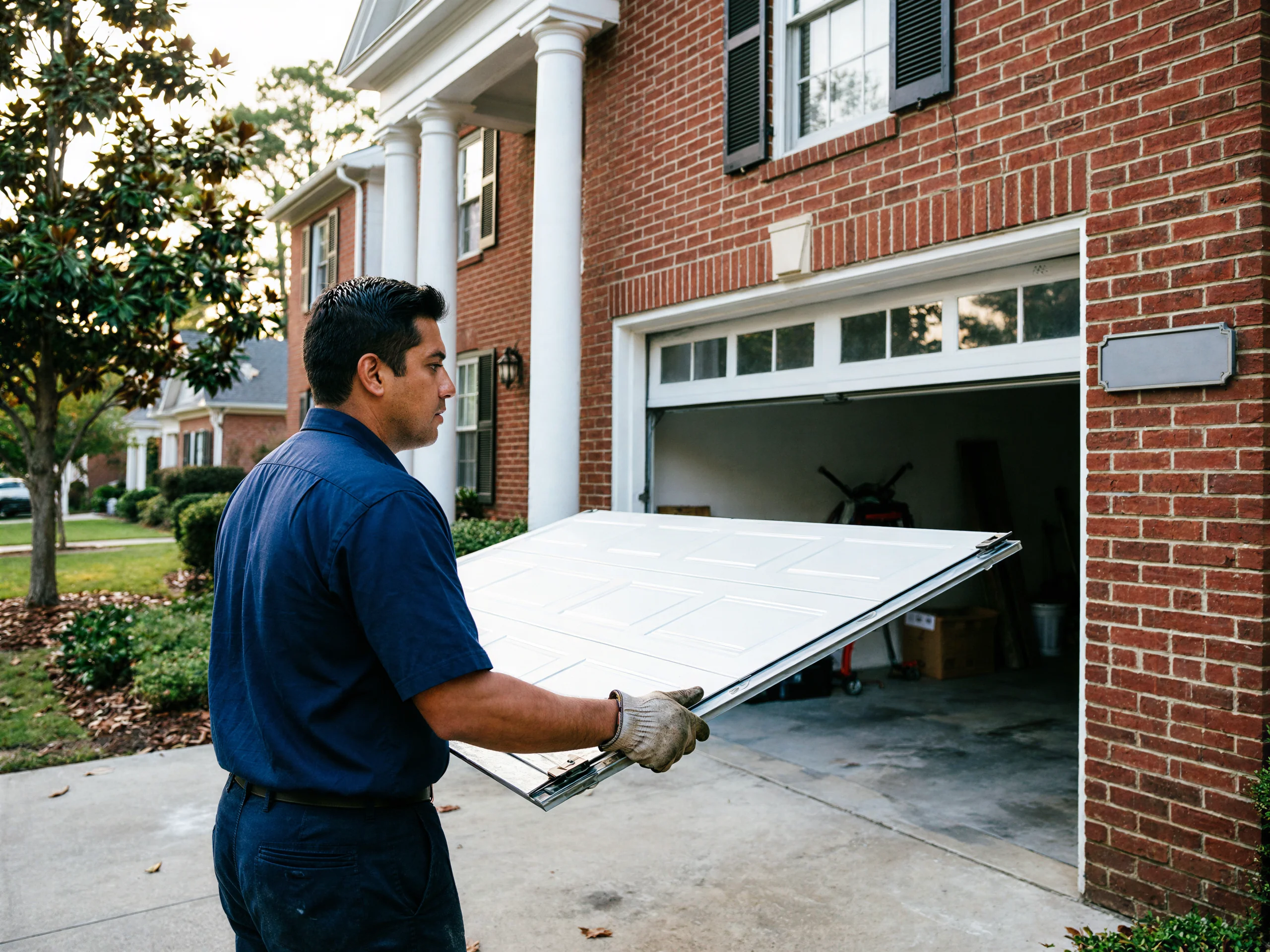
A track that's bent, usually from a door that's been run on it crooked for a while or from something striking it, doesn't get straightened. Bent track gets replaced, because a hammered-straight rail will walk out of true again within months.
Cables and brackets checked
While we're in there we check the cables and the bottom brackets, since a fraying cable is often what let the door come off level in the first place.
Unbalanced spring causes derailing
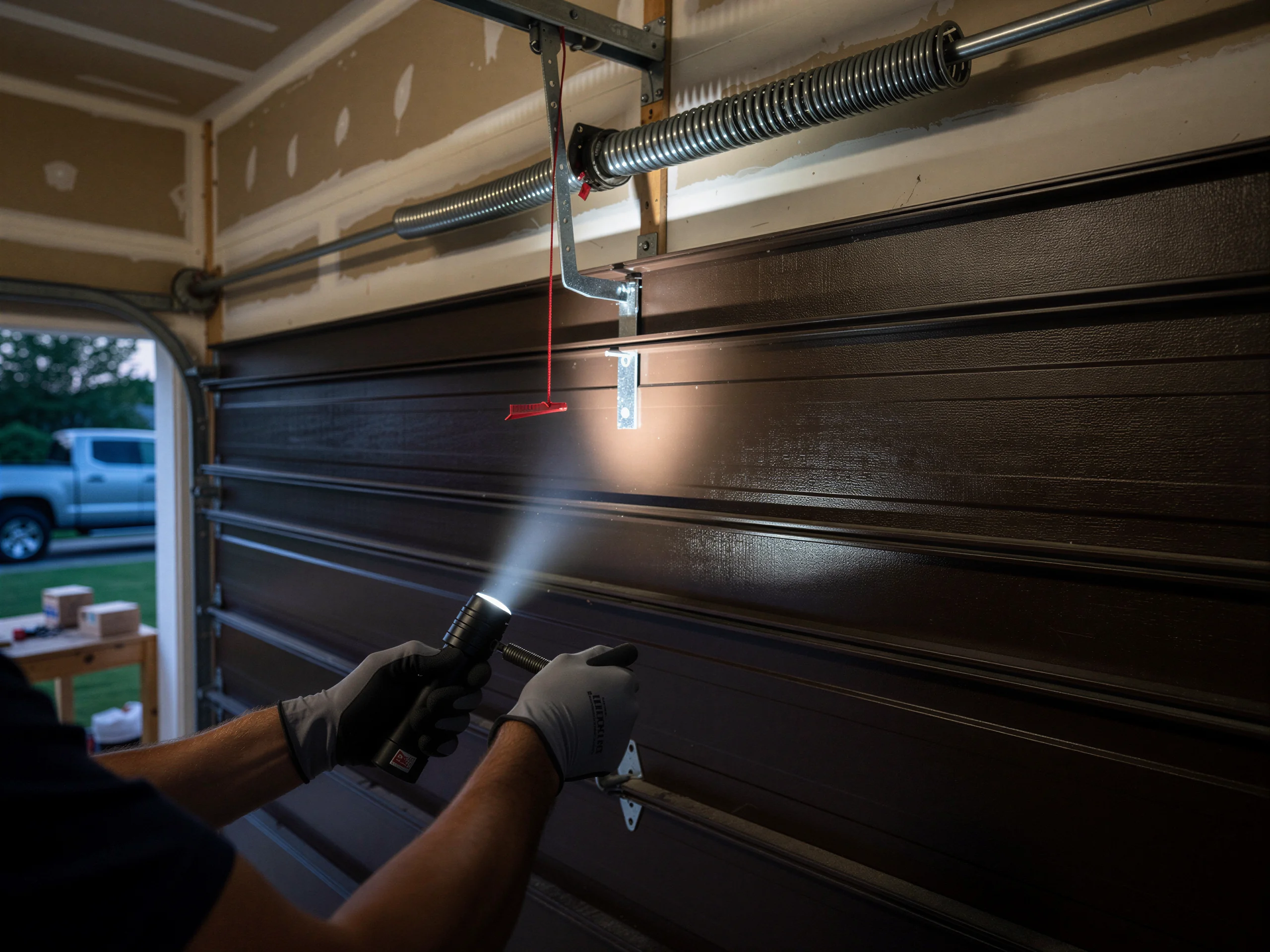
We also check the torsion or extension springs, because a door that's fighting an unbalanced spring puts uneven pressure on the track every time it opens and closes - that's a second cause of the same symptom and it's worth ruling out so the door doesn't jump track again in a few months. We don't replace parts that aren't the problem. If the track is sound and it's a bracket issue, that's what gets fixed, not the whole rail.
Time on the Job
How long this takes depends on what we find once the door is open and the track exposed. A simple bracket reset and roller swap is a different job than a bent track section that needs to come out and get replaced, especially on a double door where both rails have to stay matched.
No flat time quote
We don't quote a flat time before we've looked at the hardware, because a door that looks like a simple off-track call can turn into a spring or cable repair once we're under it.
Hidden bracket and corner damage
One honest limitation: if the track has been bent for a while and the door's been forced on it repeatedly, there can be damage to the roller brackets or even the bottom panel corners that only shows up once the door's back on true track.
Flagging extra parts early
We'll flag that before we close anything up rather than after. We'd rather tell you a second part is needed than leave a door that's going to come off track again in a month.
What You Are Seeing
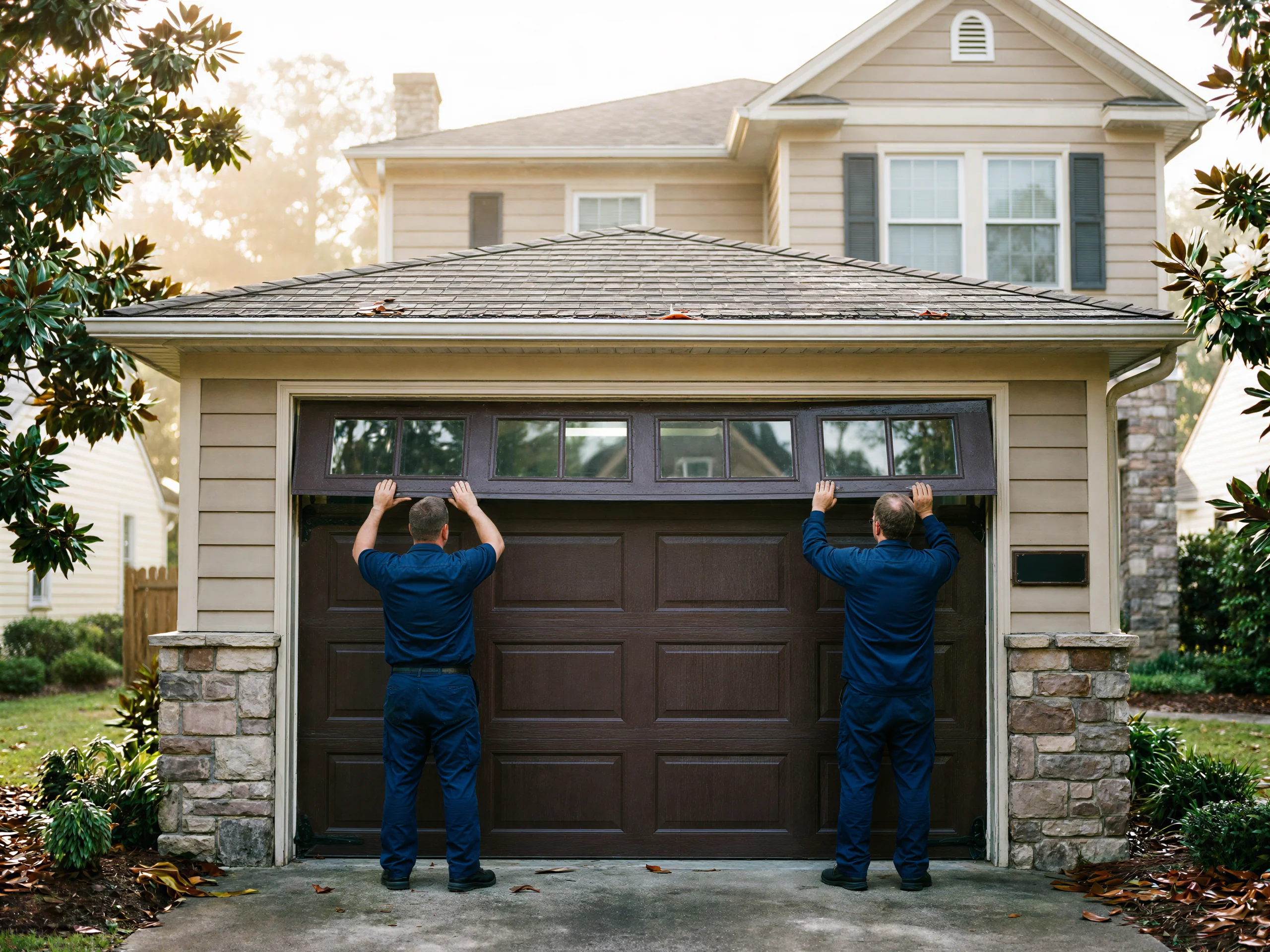
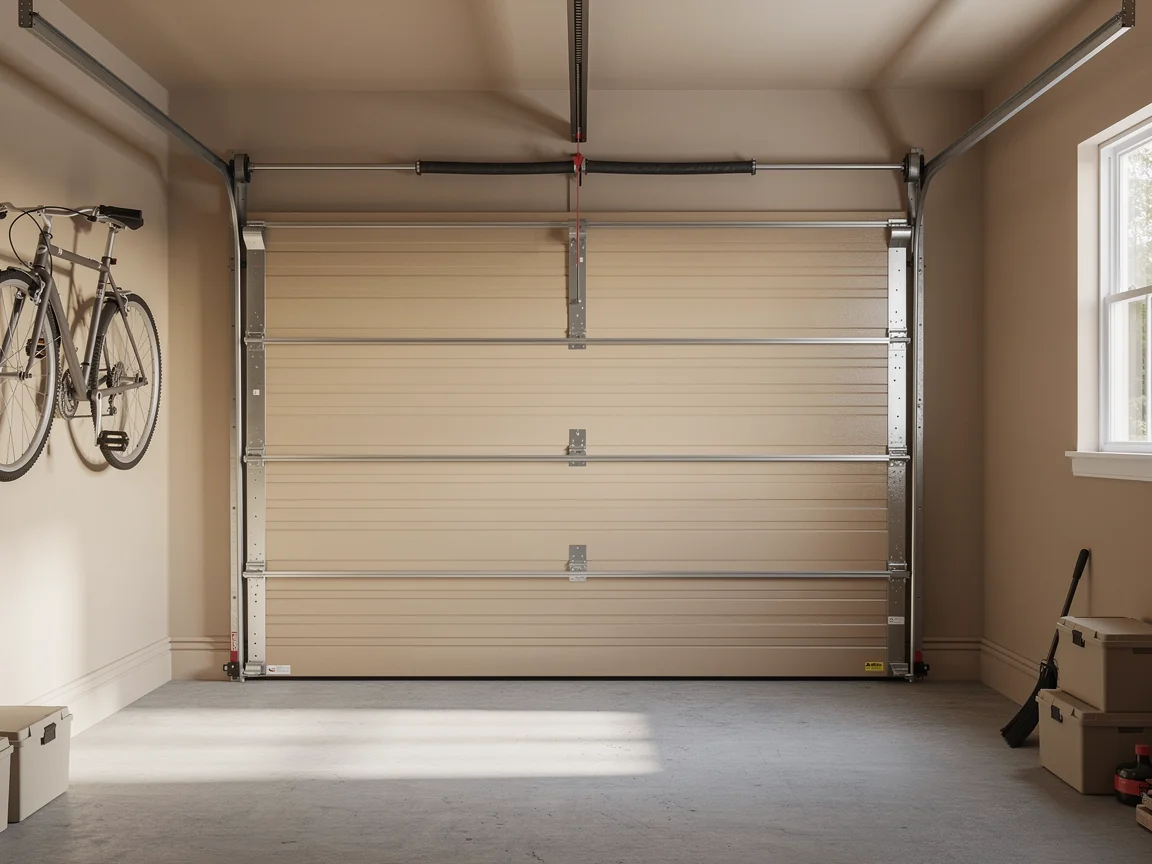
The door looks crooked when it's partway open or closed - one side higher than the other, or a visible gap between the bottom panel and the floor on one corner.
Grinding and hesitation sounds
You'll often hear it before you see it: a grinding or scraping sound as the rollers catch on a track edge that isn't aligned anymore. Some owners notice the door hesitating or jerking partway through a cycle, which is usually a roller riding up over a bent or separated section of rail.
Full derailment and bowed panel
In the worst cases the door comes fully off the track on one side and stops moving altogether, sometimes with a panel bowed out where it caught against the frame. If you hear a loud bang followed by the door refusing to move, stop using the opener - running the motor against a jammed door strains the opener gears and can pull the cable off its drum entirely.
Don't force it back
A door that's already partly off track should be left alone until it's looked at, since trying to force it back by hand is how fingers get caught in the rollers.
Talk to a local pro
Garage door service in Marietta?
Same-day service with honest, upfront quotes.