Why This Fails Locally
Across this service area, houses went up mostly between 1964 and 2007, with the heaviest concentration of that stock dating to the 1980s and 90s. That matters for panels because the steel and fiberglass skins from that era were never built to last forever, and a lot of them are now pushing past the forty-year mark. Doors from those decades also tend to run thinner gauge steel than what's sold today, so a stray basketball, a backed-into bumper, or just years of slamming shut leaves dents that don't pop back out.
This area sits in a cold-moderate climate band, which means real freeze-thaw cycles every winter. Water gets into a seam or a ding, freezes, expands, and the panel starts to bow or split along the fold. Add in standard Georgia humidity swings through the rest of the year and you get rust starting from the inside of the panel edge, not just the surface you can see. On a door with sections from the 1980s, one bad panel is often a sign the rest aren't far behind, because they've all taken the same weather for the same number of years.
With 37,853 owner-occupied houses across the service area, a lot of garages are still running the panel sets they shipped with, which is exactly the population where this shows up most.
What the Fix Involves
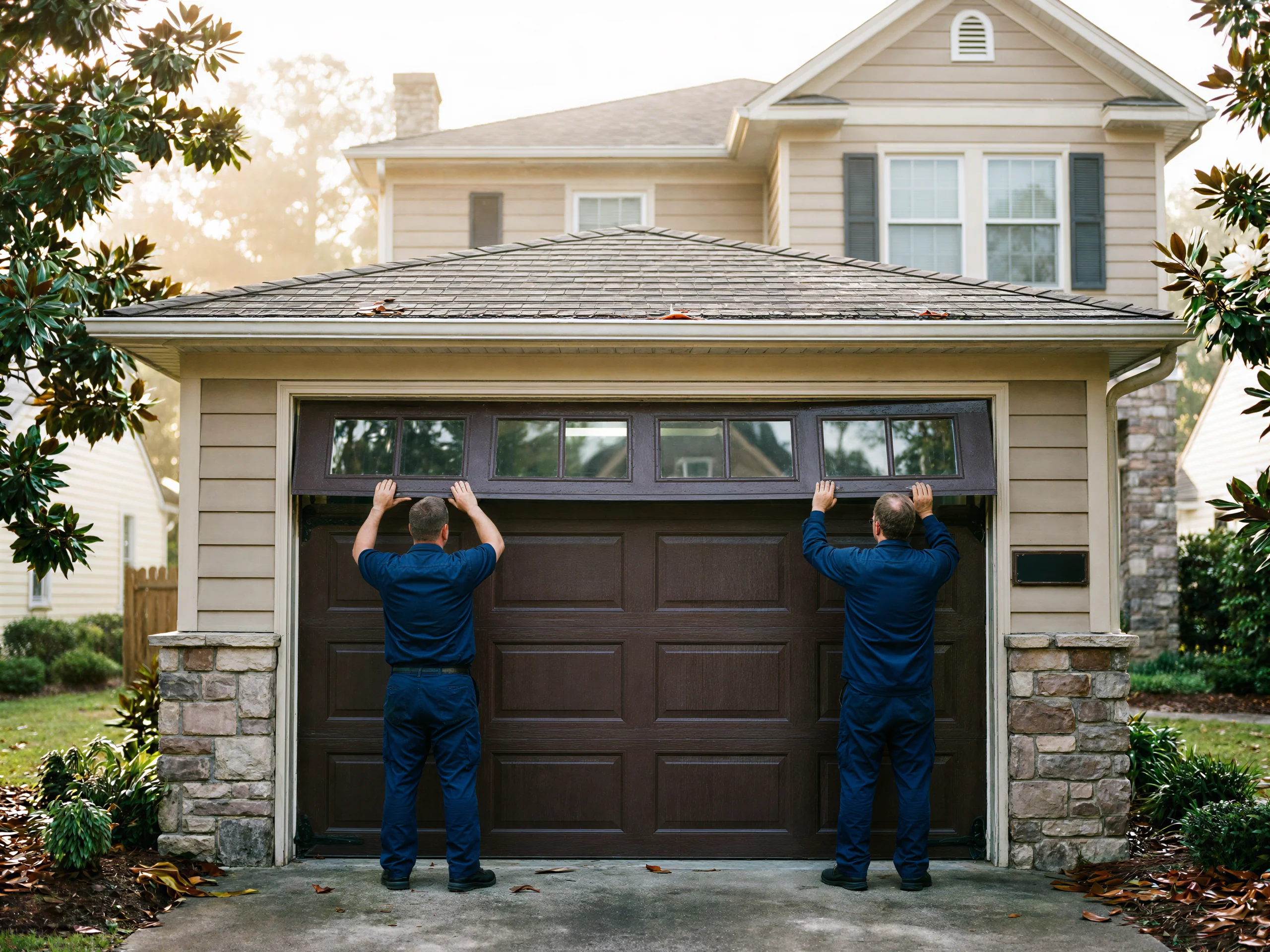
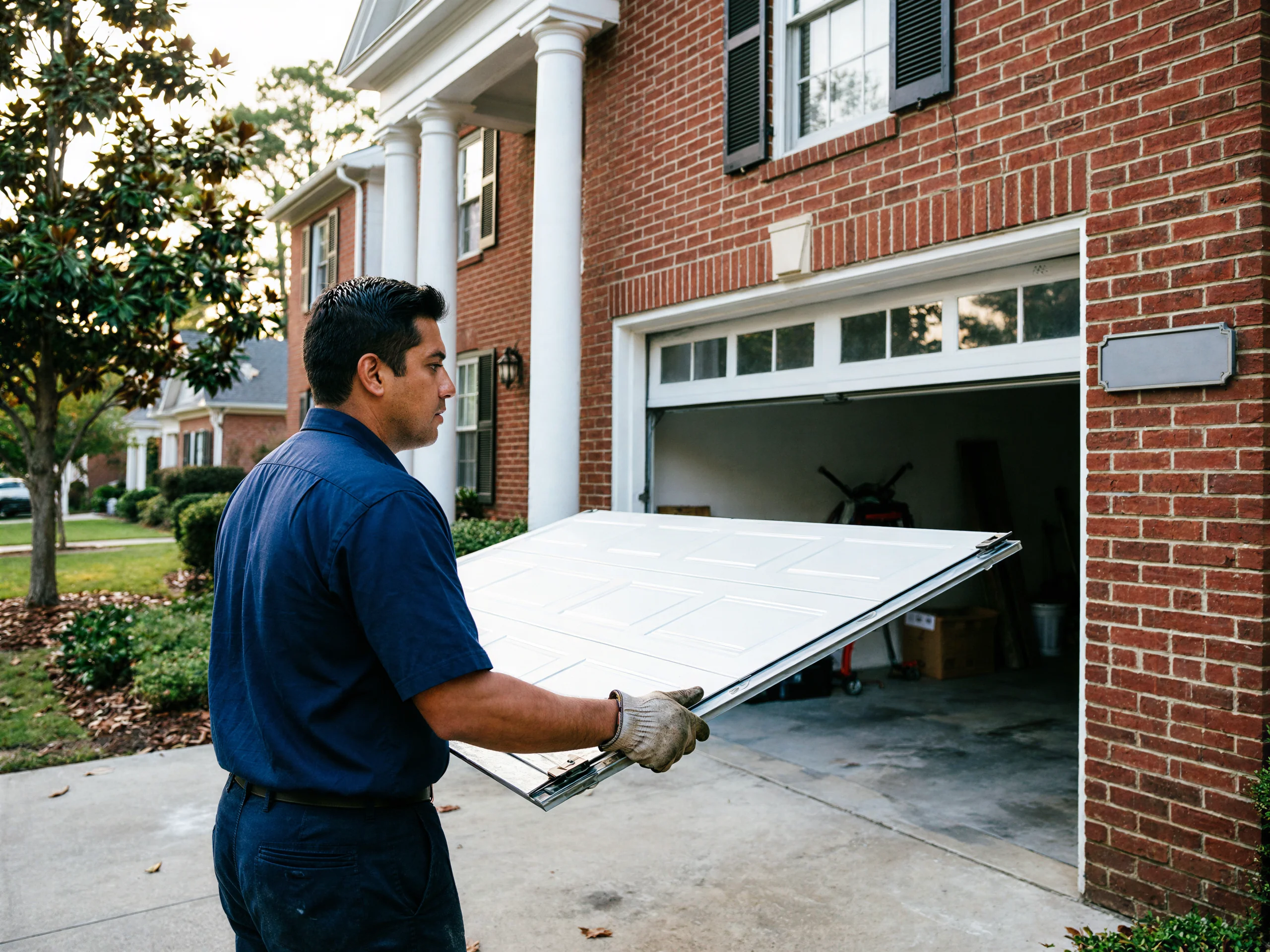
Panel replacement starts with matching the section to the existing door, which is the part that takes judgment, not just a tape measure. Panel profiles and colors have changed enough times since the 1960s that an exact match on an older door isn't guaranteed, and sometimes it isn't available at all.
Matching panels across lineups
That's the honest limitation here: on a door old enough to predate the current manufacturer lineups, you may be choosing between a close match on one section or replacing more panels than just the damaged one so the door reads as uniform.
Panel swap steps
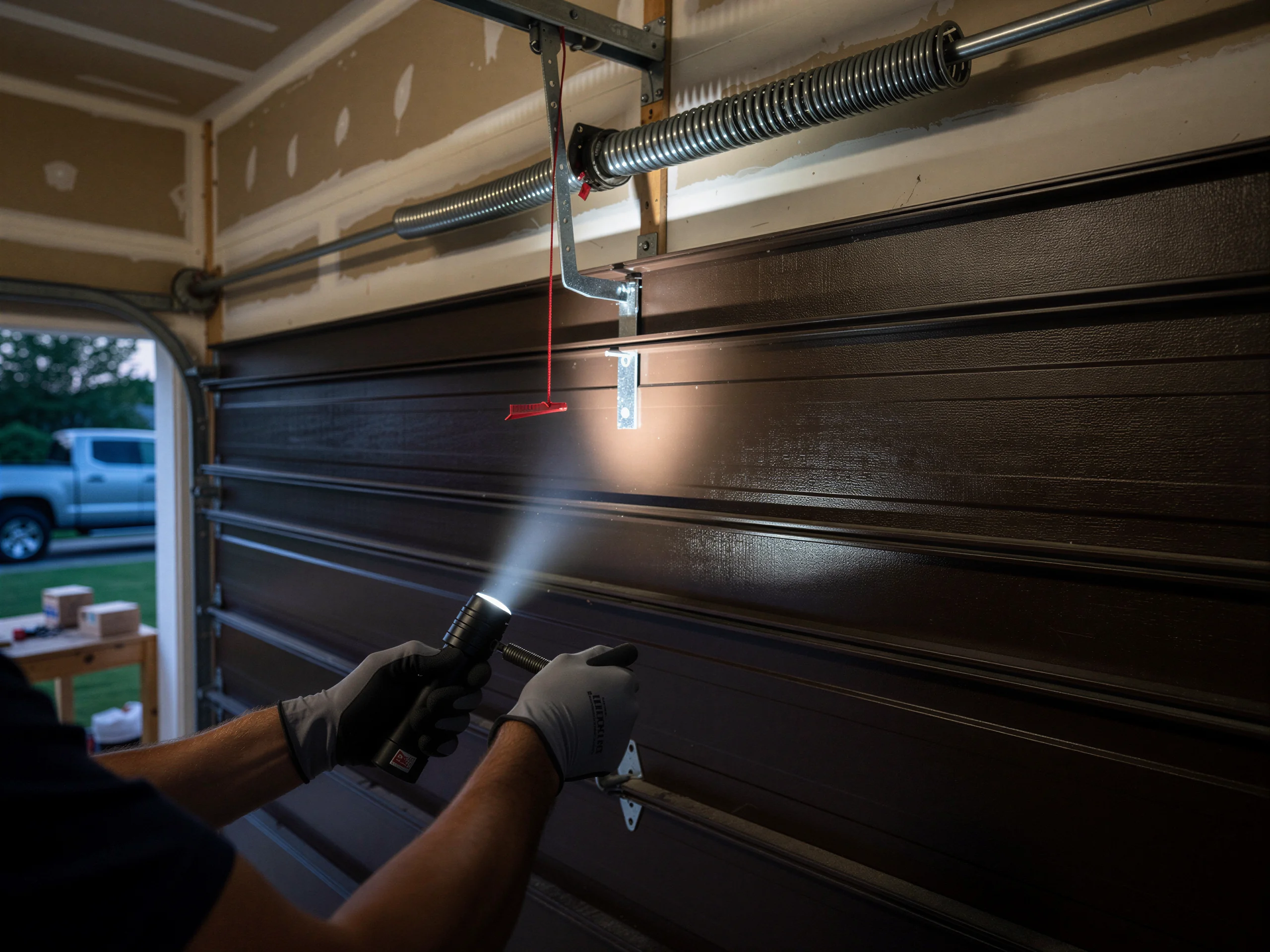
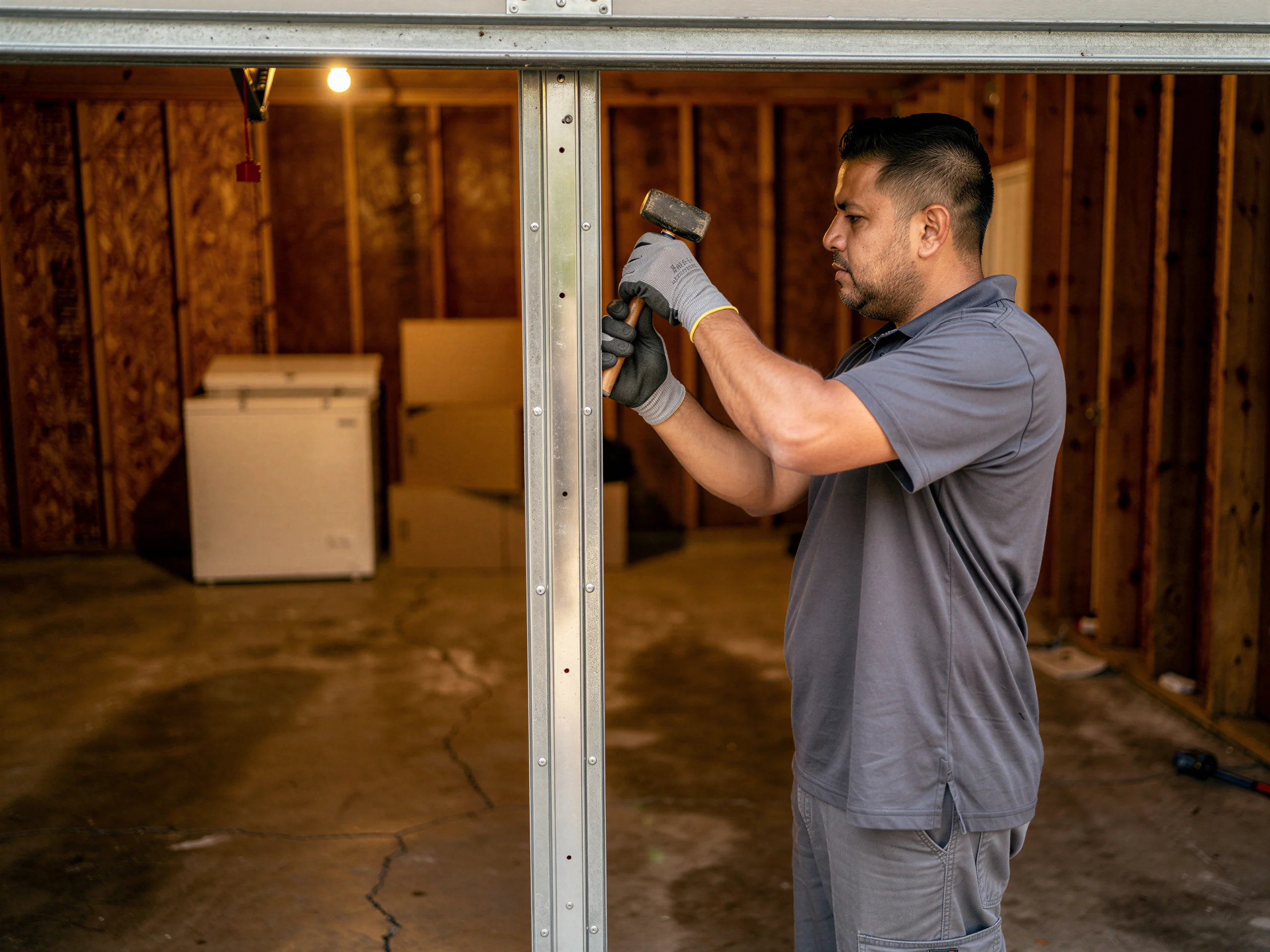
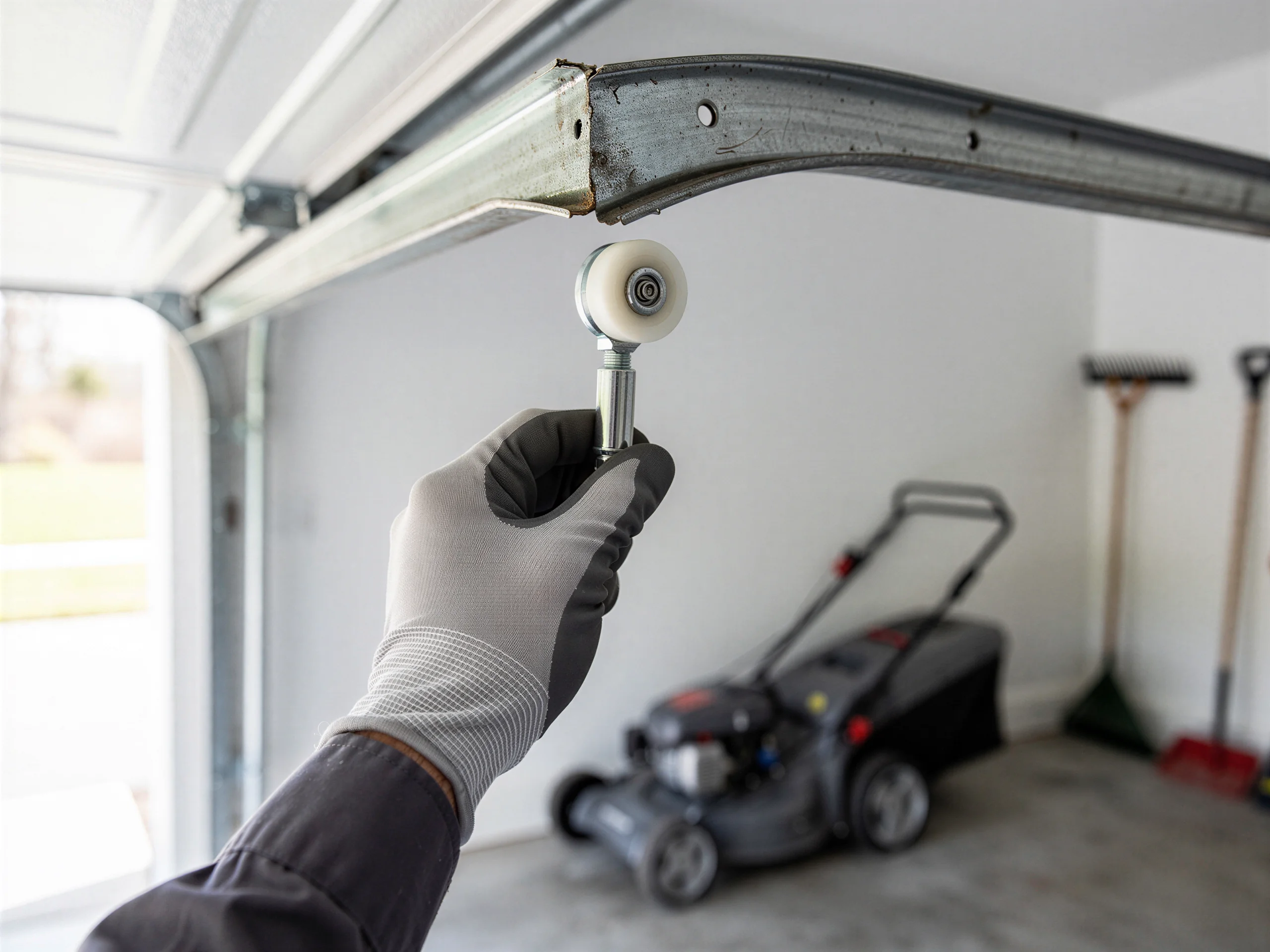
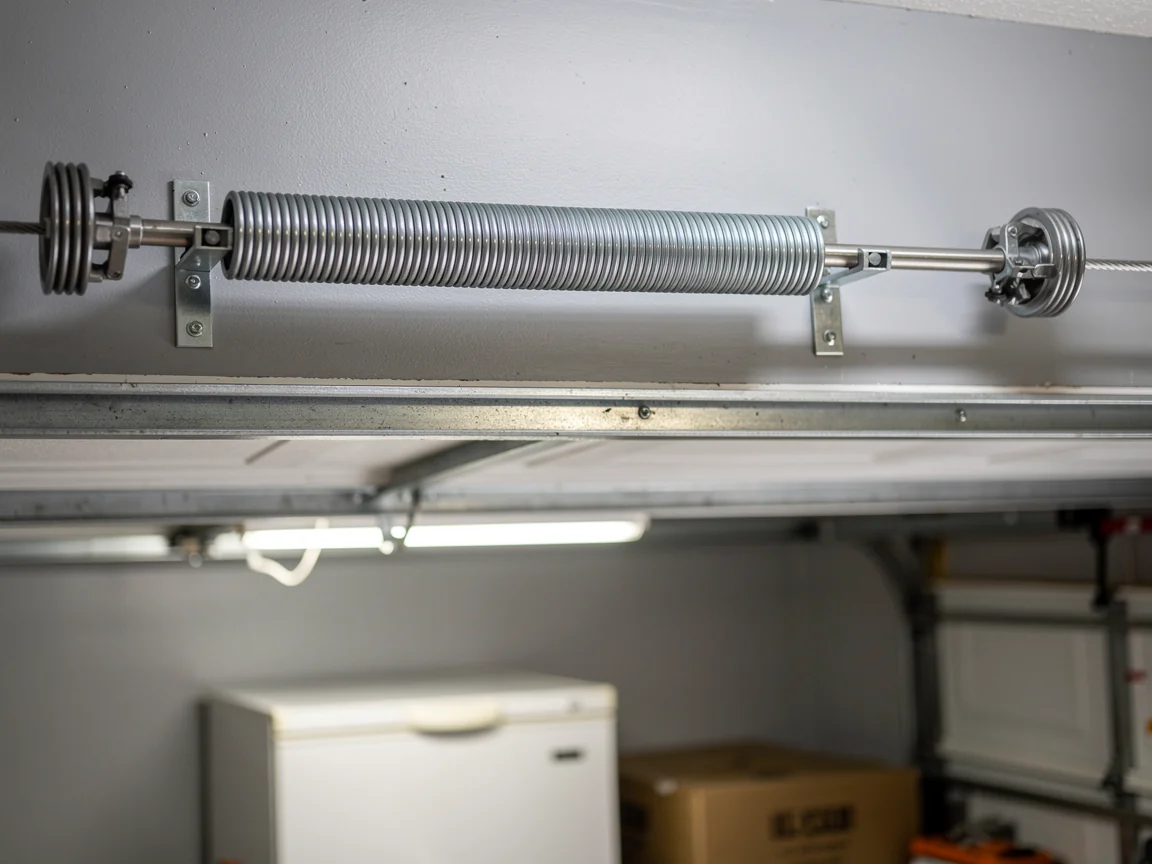
Once a panel is sourced, the job is mechanical: disconnect the spring tension, pull the end hinges and rollers off the damaged section, swap in the new panel, and reset the hardware so the track alignment and roller travel are right. Hinges, rollers, and end brackets from an original 1980s or 90s install often need replacing at the same time, since reusing worn hardware on a new panel is how you end up back here in six months.
Panels cheaper than full door
Given a median household income of $82,276 across the service area, panel replacement is usually the call homeowners make over a full door swap when the rest of the door is sound. It costs less and keeps hardware you already know works, but it only makes sense if the remaining panels and springs have real life left in them.
Time on the Job
How long a panel job runs depends on what's underneath it, not just the dent you can see. A single-section swap on a door with healthy hardware and a panel in stock is a straightforward visit.
Rebalancing extends panel jobs
A job gets longer when the spring needs rebalancing after the panel swap, when hinges or rollers have to come off and get replaced too, or when the panel isn't a common size and has to be tracked down before work can start.
More sections, more hardware
Double doors and doors with more sections take more time simply because there's more hardware to pull and reset per panel. Garages with older torsion setups from the 1980s and 90s sometimes need extra time just to get the spring tension released safely before any panel work starts, since that hardware wasn't always installed the way it would be today.
Timing hard to pin down
The straight answer is that panel replacement timing varies enough by door age, section count, and hardware condition that it's not something to pin down without looking at the actual door. What's consistent is that a door with one shot panel and otherwise sound hardware goes faster than one where the panel damage is a symptom of everything around it wearing out at the same time.
What You Are Seeing
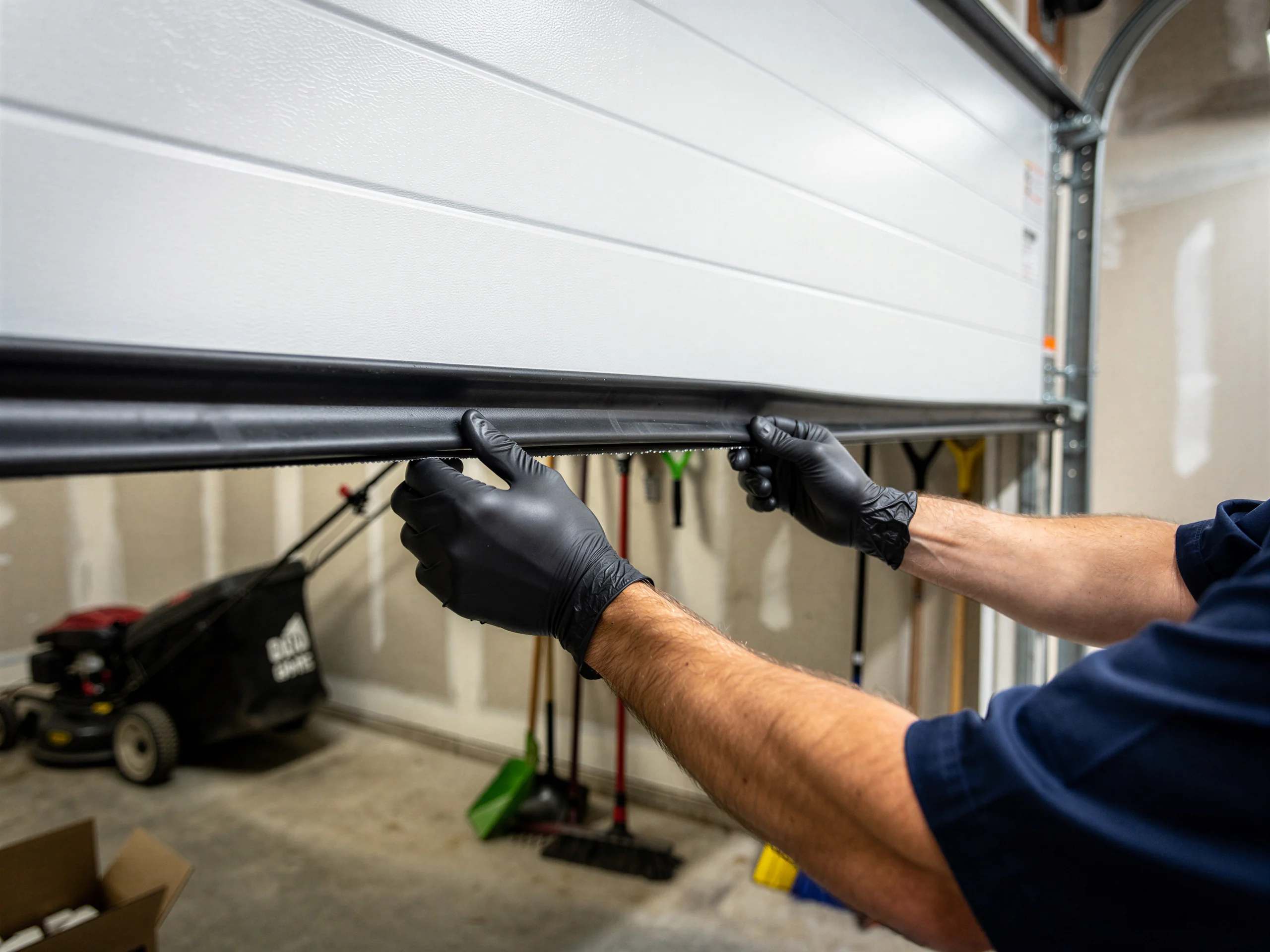
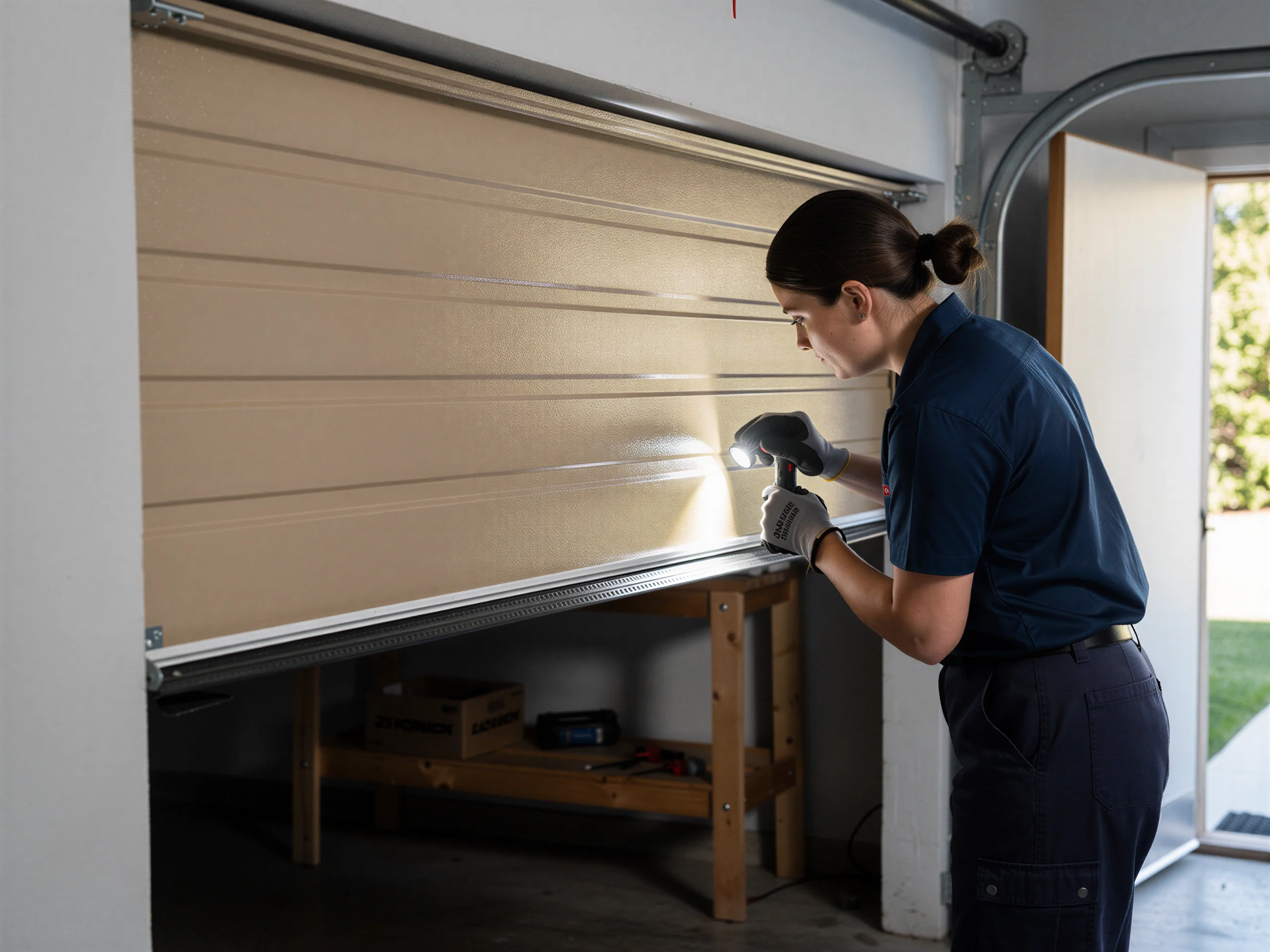
The most common sign is a visible dent or crease in one section, usually at bumper height if it came from a vehicle or lower down if something got backed into it.
Rust hidden under paint
Rust shows up differently: it starts as bubbling paint along a seam or the bottom edge of a panel, and by the time you can see flaking, the metal underneath is already thinning. A panel that's split or separated at the fold, rather than just dented, usually means water got in and froze at some point during a Georgia winter.
Gaps and proud sections
You might also notice daylight coming through a seam between two sections, or a section that sits slightly proud of the ones next to it when the door is down, which points to a bent panel pulling on the track.
Binding points to hardware
If you're seeing the door bind, jerk, or reverse partway through a cycle, that's not usually the panel itself, that's the hardware the panel is riding on, and it's worth having both looked at together. A door with 37,853 owner-occupied houses worth of peers across the area means these are common symptoms, not unusual ones, for houses built in the decades this area was mostly built out.
Talk to a local pro
Garage door service in Marietta?
Same-day service with honest, upfront quotes.