Doing It Yourself
Most of the garage doors we run into in Powder Springs went up around 1995 - steel sectional panels, usually a 16x7 double on torsion hardware, built a decade or so later than the typical door across the rest of Marietta's service area, where the median build year sits closer to 1984.
Thirty-year-old rollers and wind
That matters because a 1995 door is now pushing thirty years on its original rollers and spring wind, right at the point where fatigue starts showing up as noise instead of failure. You can catch a lot of it yourself.
Light oil, not grease
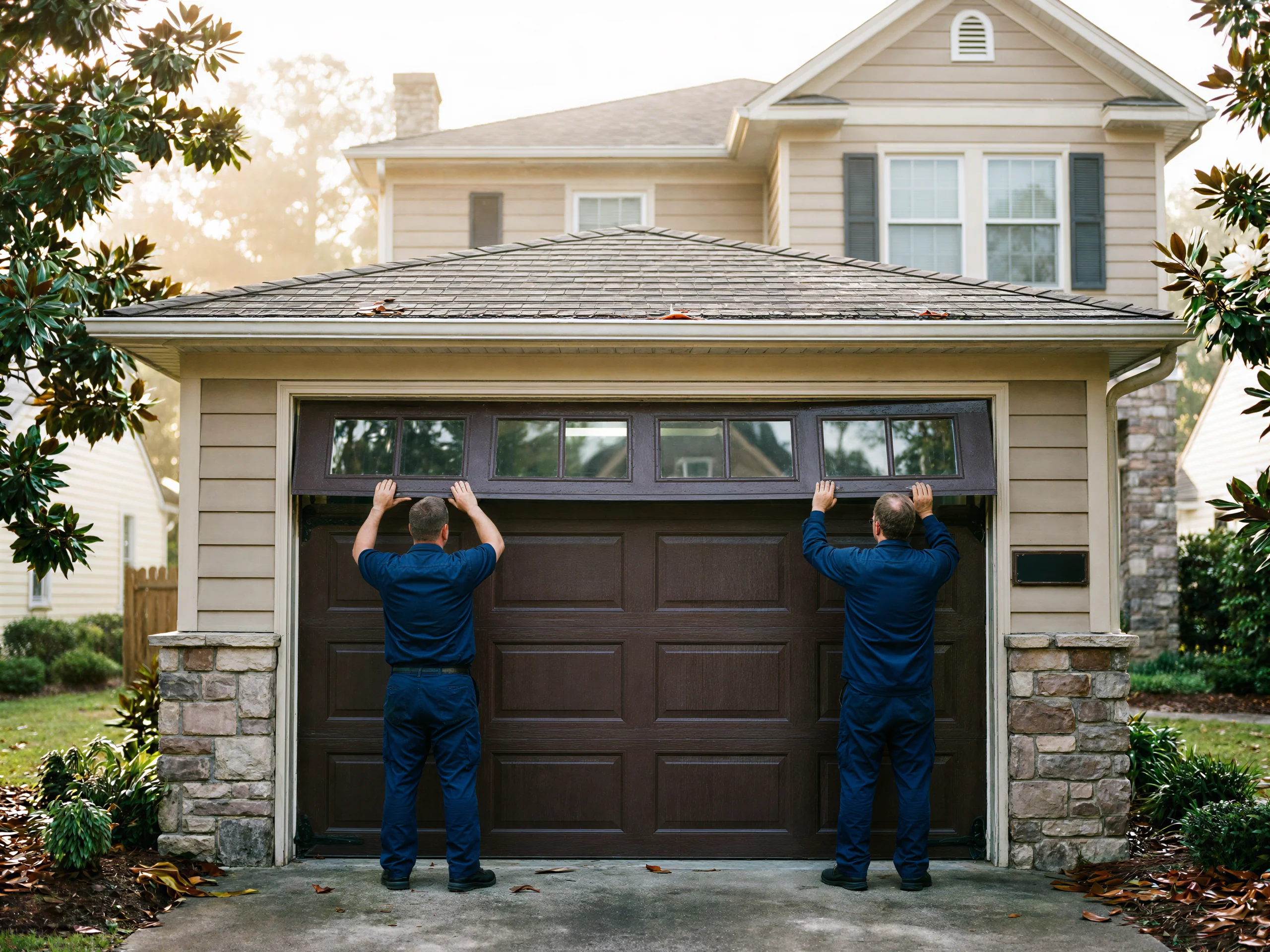
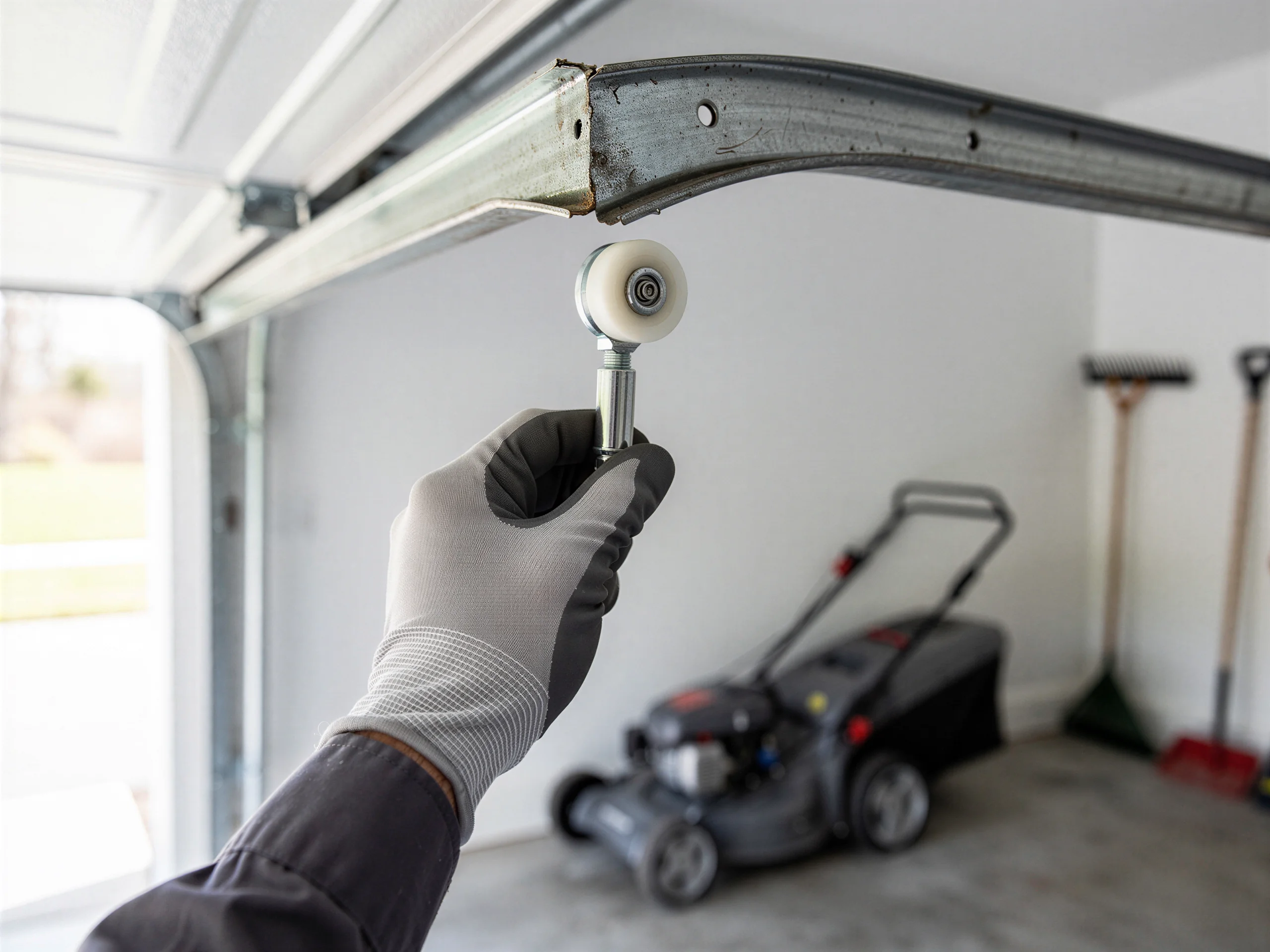
Twice a year, run a light oil (not grease) on the rollers, hinges, and the torsion shaft bearings - no WD-40, it strips lubricant more than it adds it. Disconnect the opener and lift the door halfway by hand: it should hold position on its own.
Drop or rocket warns of spring
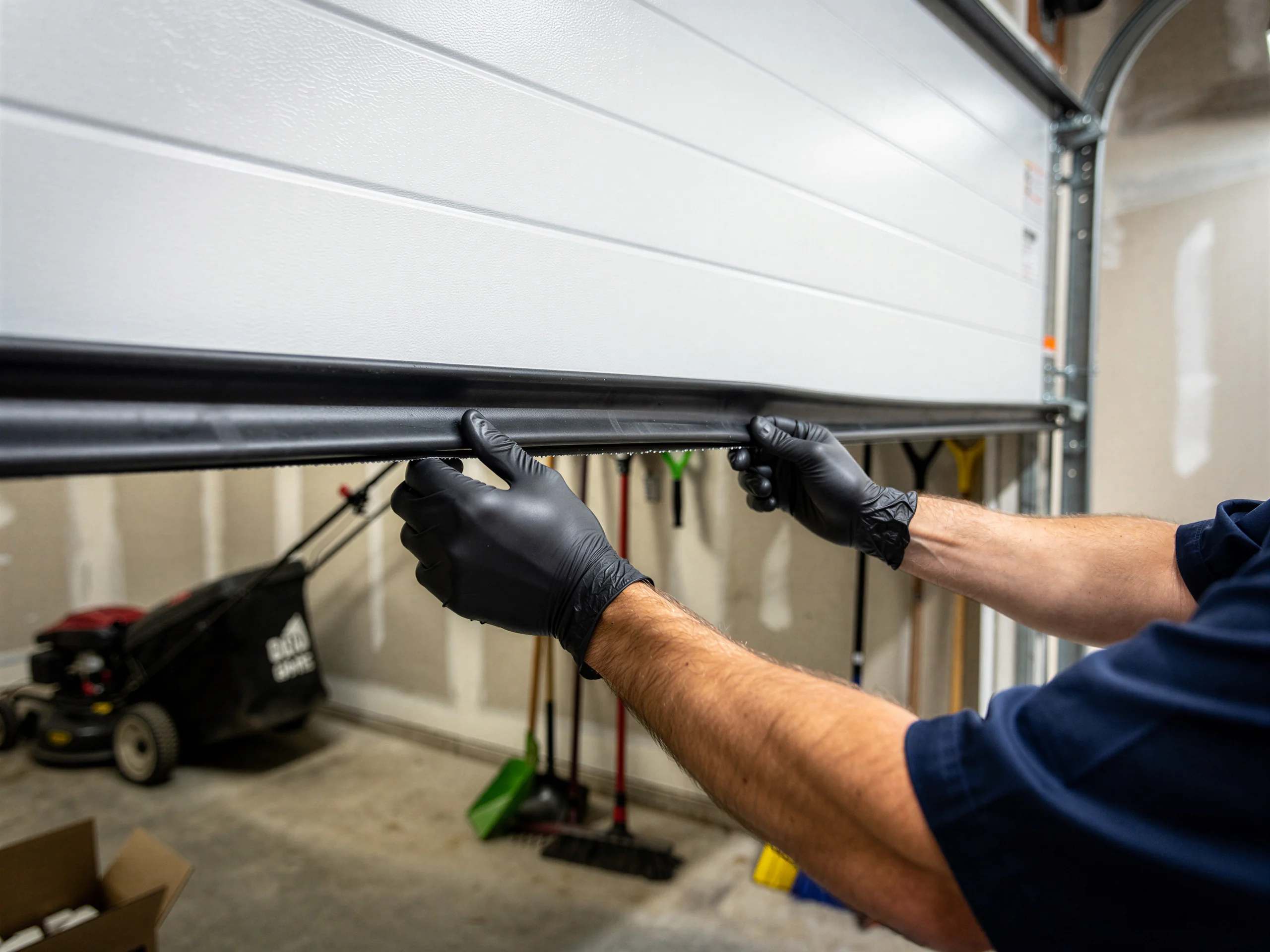
If it drops or rockets up, the spring tension is off and that's not a DIY adjustment - torsion springs store enough force to cause a real injury. Walk the bottom seal too. This area sits in a cold-moderate climate band, and a cracked or flattened astragal lets cold air and water into the slab edge all winter.
Stocked Parts
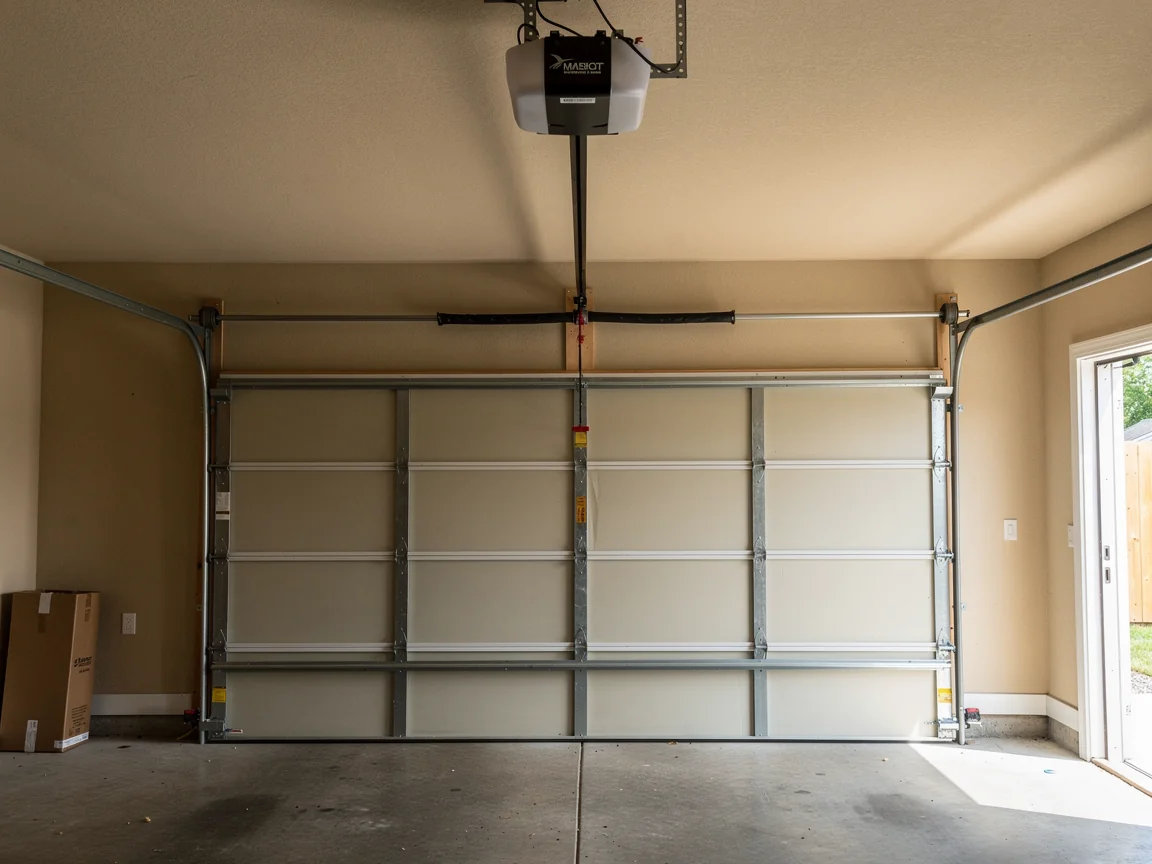
The truck out of Marietta carries what a 1990s steel sectional door actually needs: torsion springs sized for a standard 16x7 or 9x7 double, galvanized lift cable, nylon rollers with sealed bearings, and bottom seal track long enough for a full-width door. Those cover the large majority of what we find on doors built around 1995 in Powder Springs.
Where it gets slower is anything non-standard - an extension-spring setup instead of torsion, or an opener bracket that doesn't match current hardware. That's not common on a door this age, but it happens, usually on a door that's already been part-replaced once. When it does, the part gets ordered and the job becomes two visits instead of one. We'd rather tell you that up front than pretend every job finishes in a single stop.
Time on the Job
Powder Springs sits about 10 miles from the Marietta shop, so a maintenance visit here gets scheduled on the route, not dispatched same-hour.
Planned run, not counter
That's worth knowing before you book - this isn't a walk-in counter, it's a truck that comes from Marietta on a planned run. Once on site, a routine tune-up is inspection and adjustment work, not a parts swap: check spring tension, lubricate moving hardware, test balance, align the track, look over the opener's safety reverse.
Catching small issues early
Most of that time goes to catching the small stuff - a roller starting to flat-spot, a cable strand starting to fray - before it becomes a Saturday morning call with the car stuck inside.
Getting It Booked In
Powder Springs carries a median household income of $96,961, noticeably above the $82,276 median across the wider Marietta service area, and that shows up in how owners here book service - more tend to set a yearly tune-up on the calendar rather than wait for a spring to go. With around 6,195 households in Powder Springs alone, against roughly 111,498 across the full service area, this is a smaller piece of the territory, but it's a regular stop on the schedule.
You can book through the Powder Springs service page, which covers scheduling for this area specifically. If you're weighing maintenance against a bigger repair or a full replacement, the Marietta maintenance page lays out the full range of what gets done out of the shop.
What the Fix Involves
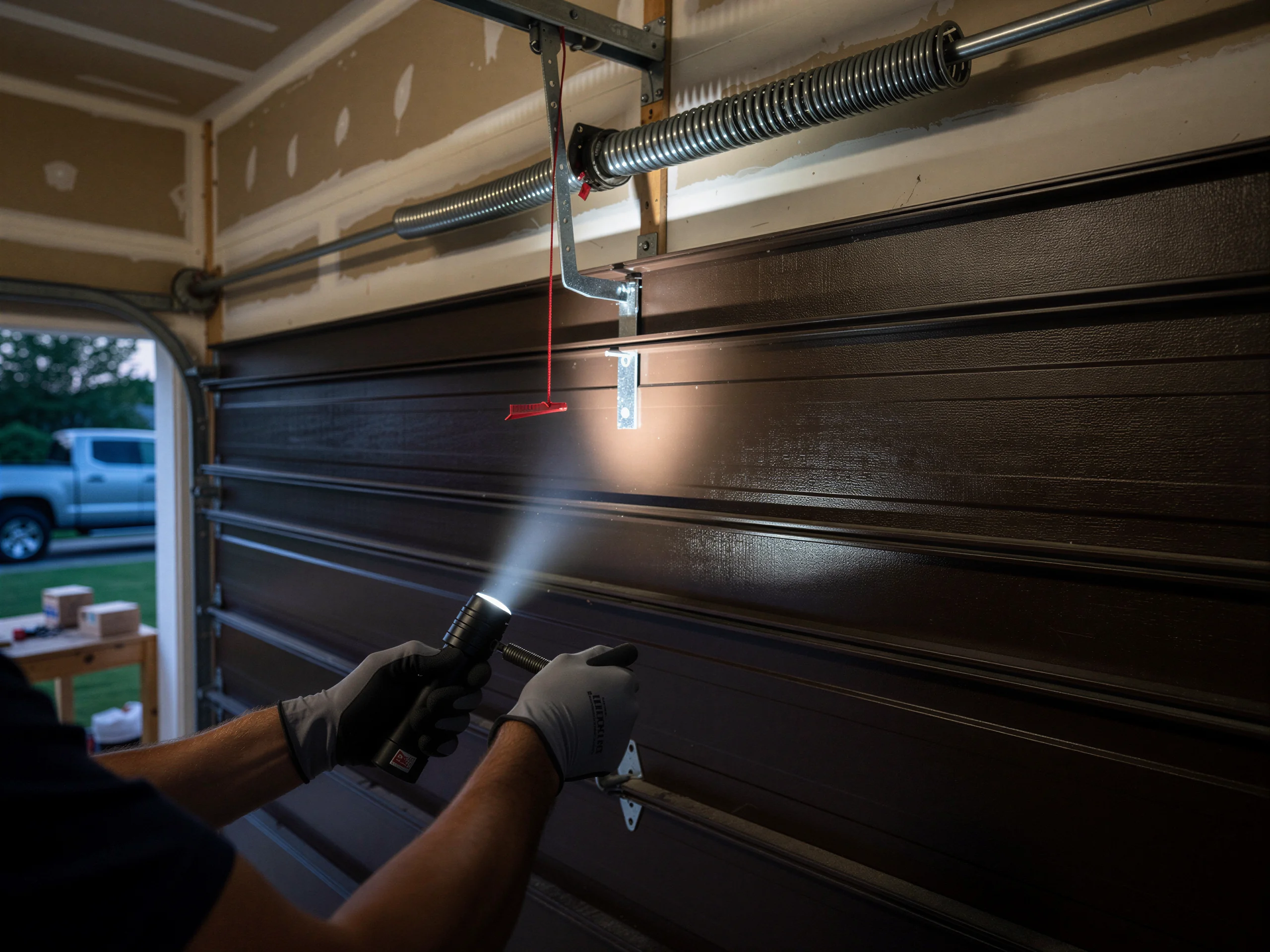
A tune-up on a door from the Powder Springs era starts with the spring. Torsion springs on a steel sectional door lose a measurable amount of lift over twenty-plus years, and resetting the winding cone gets the door back to lifting evenly instead of dragging on one side.
Track bowing and flat rollers
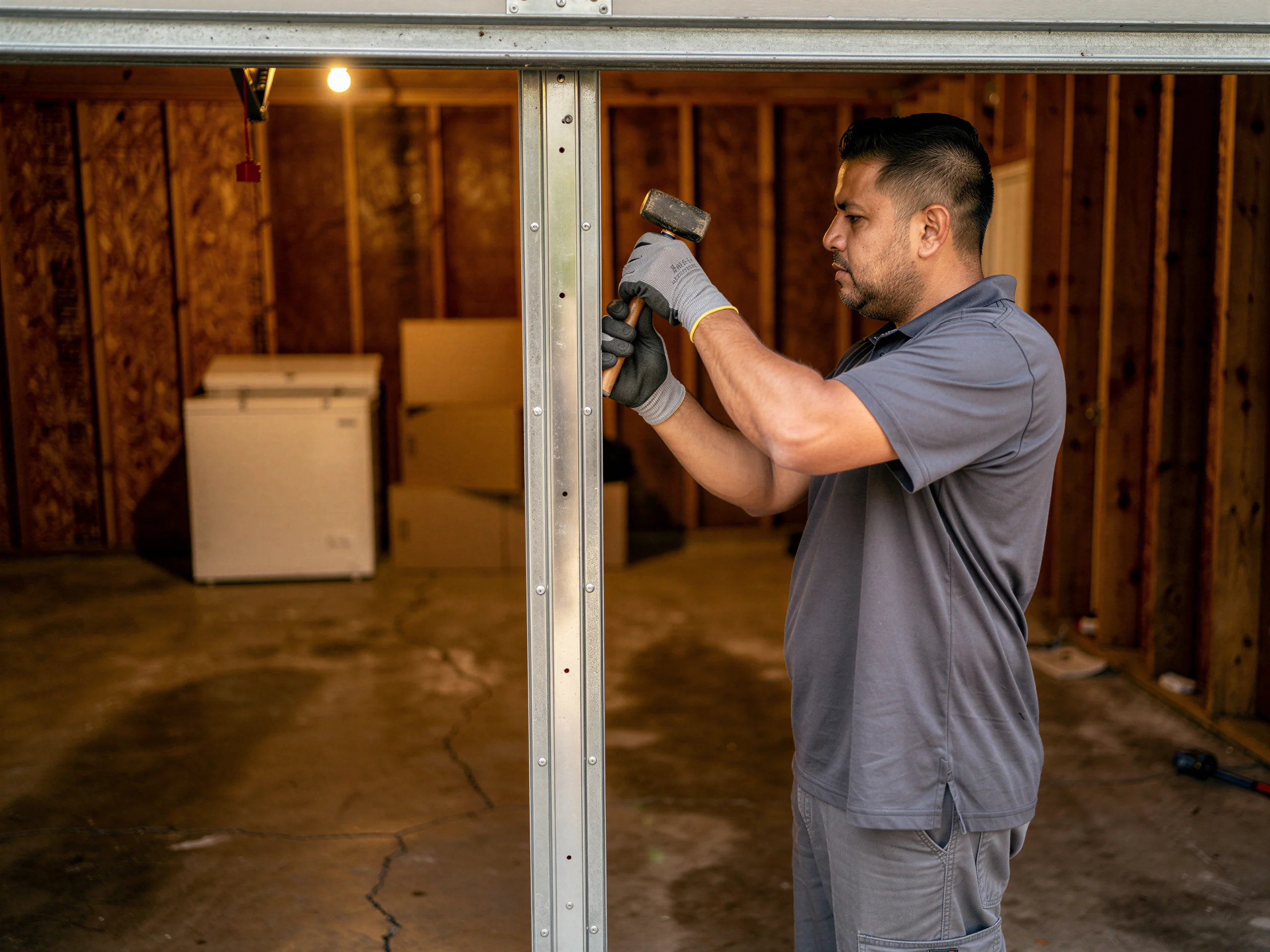
From there it's the track - checking for bowing or gaps where the rollers ride, since a misaligned track is what turns a smooth-running door into a grinding one. Rollers get swept for flat spots or cracked nylon and swapped where worn.
Cable fraying at bracket
Cables get checked end to end for fraying, especially near the bottom bracket where rust takes hold first. The opener's photo-eye sensors get wiped and realigned, since a door this age has usually had at least one sensor knocked out of line by a stored bike or a snow shovel.
Stiff bottom seal replaced
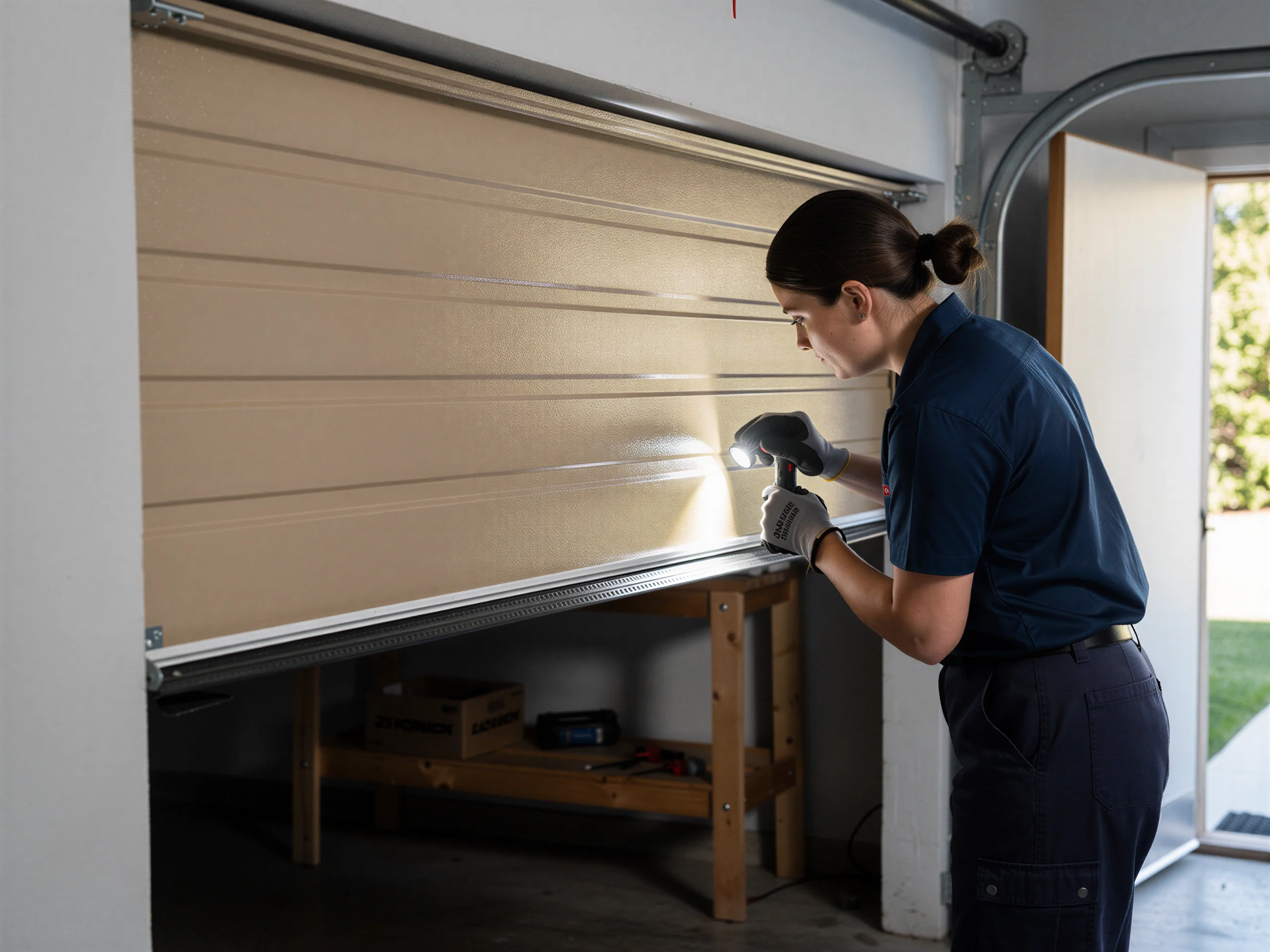
Last is the bottom seal - given the cold-moderate climate here, a stiff or split astragal is one of the most common things we replace on a door built around 1995, and it's cheap compared to what a gap that size does to a heating bill over a winter.
Talk to a local pro
Garage door service in Marietta?
Same-day service with honest, upfront quotes.