Time on the Job
Most houses in Peachtree Corners went up around 1988, which puts a lot of garages at the 35-plus year mark on their original hardware. A door doesn't announce its age until the spring finally lets go or the opener's drive gear strips out at the worst possible moment.
Original bearings and rollers
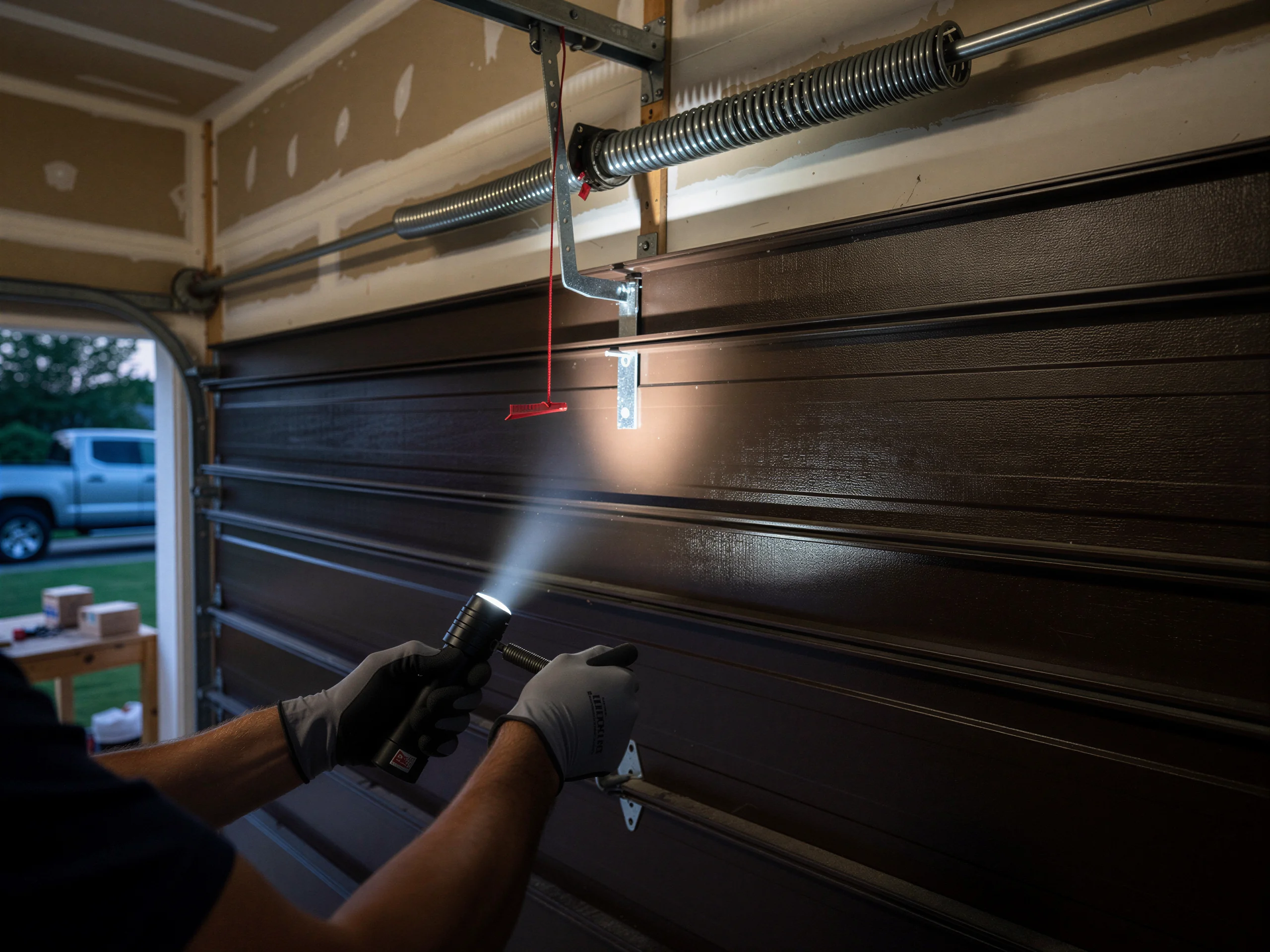
If nobody has ever swapped the torsion spring, the end bearing plates, or the original steel rollers on your door, there's a decent chance that's still the exact hardware the builder installed. We travel the 18 miles out from Marietta for these calls, and the first thing we check isn't the opener - it's whether the spring, drums, and cables match a build date pushing four decades old.
Younger housing stock out here
That tells us more about what's about to fail than anything else on the door. This isn't a Marietta-era question, it's a Peachtree Corners one specifically, since the housing stock out here runs younger than some of the closer-in areas we cover and older than the newest subdivisions further out.
Hard failure on old parts
A door that's never seen a cable replacement or a new bottom bracket is running on borrowed time, and when it goes, it tends to go hard - usually with the car halfway out and the spring already snapped.
Stocked Parts
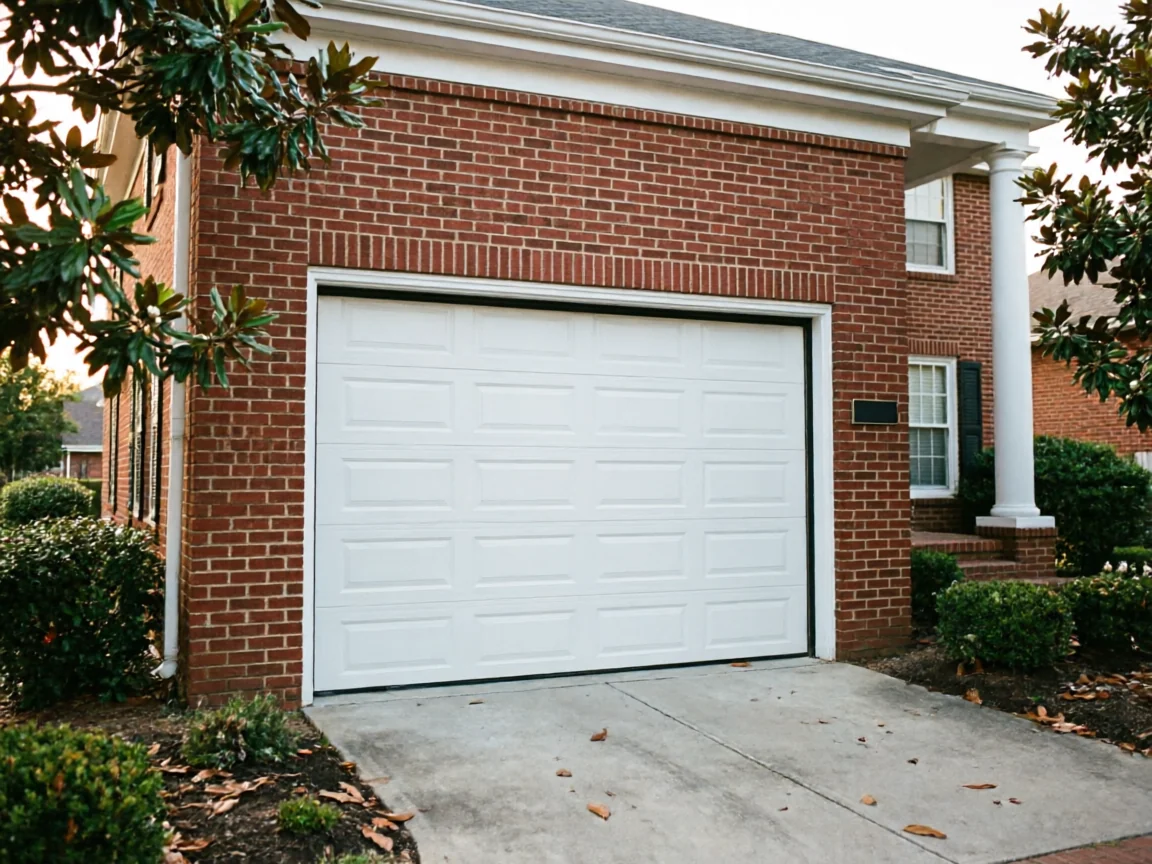
Because so much of Peachtree Corners was built in that same late-1980s stretch, we keep the parts that era needs on the truck instead of ordering them after we've already diagnosed the problem. That means standard-width torsion springs sized for the single and double door openings common to houses from this build period, galvanized lift cables, and the sectional steel rollers that were standard before nylon took over. What we don't carry on the truck is anything custom - a door that was resized, a track bent to fit a non-standard header, or a specialty insulated panel from a later remodel. If your door has been modified since 1988, we may need to order a part, and we'll tell you that on-site rather than promise same-visit parts we don't have.
What It Costs
We don't post prices here because a broken spring on a single door and a snapped cable on a double door with a dead opener are two different jobs with two different bills.
Factors driving repair cost
What we can tell you is what drives the cost: whether the hardware is standard for a house this age or something custom, whether one spring failed or both need replacing, and whether the opener itself is original or already swapped out. On a late-1980s build, we're usually dealing with parts we already stock, which keeps the job to a straightforward repair instead of an order-and-wait.
Rebuild only for rusted panels
If the torsion spring, drums, and track are all original and none of it has ever been upgraded, expect a repair, not a rebuild - full replacement only makes sense if the section panels themselves are rusted through or badly dented, which is rare on hardware this old if it's been otherwise maintained.
What You Are Seeing
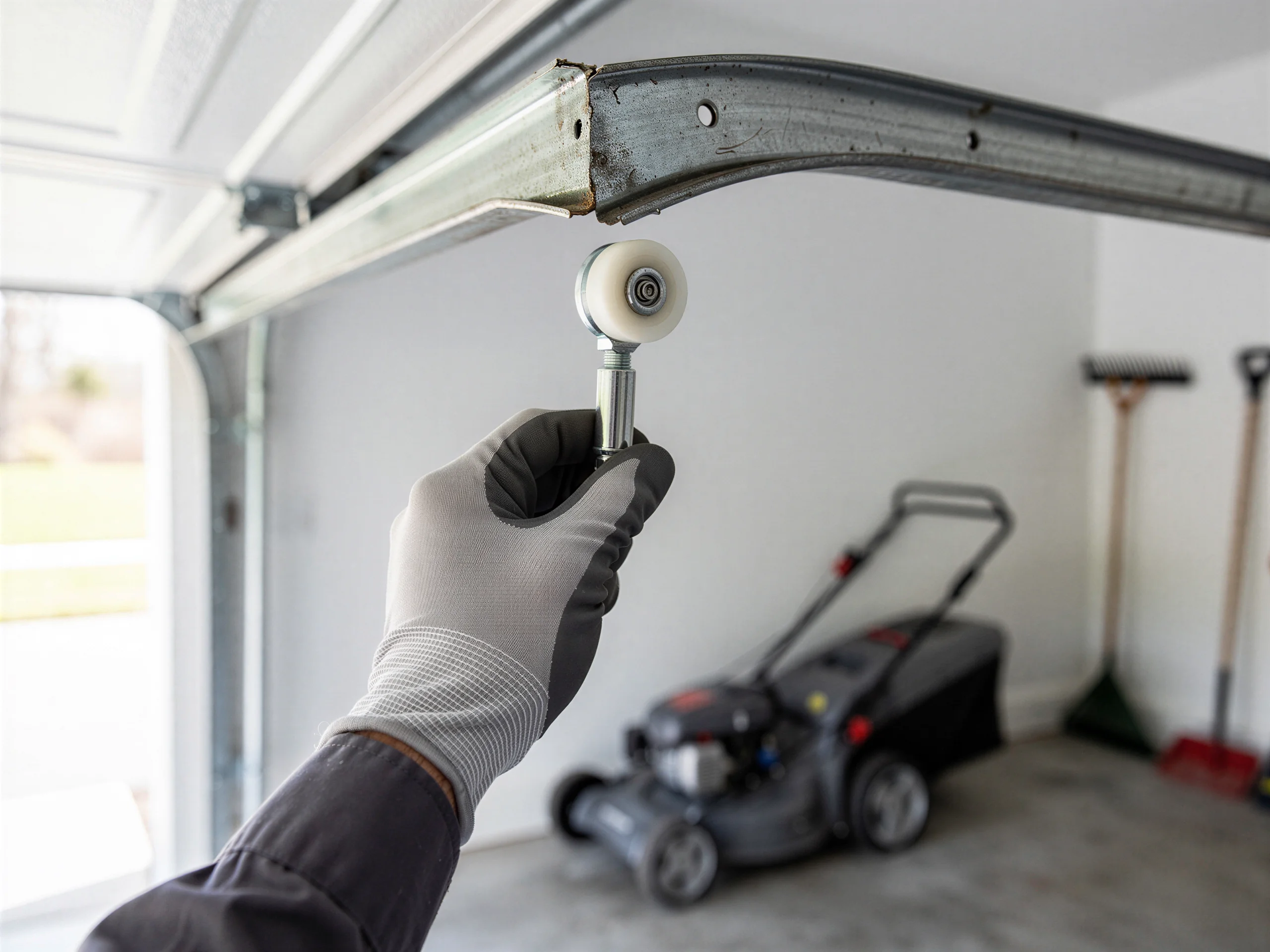
A door that slams down the last foot, a cable that's frayed and visibly loose on one side, an opener that hums but the door doesn't move - these are the calls we get most from houses built in this 1988 window. The spring on one side goes first, usually not both at once, which is why the door looks like it's trying to close crooked. Rollers from this era were steel, not nylon, and after this many years they're often worn to an oval instead of round, which is what makes the door sound like it's grinding partway through the cycle. None of this is Peachtree Corners-specific weather damage - our winters here are cold but moderate, nothing like the freeze-thaw cycles that crack concrete further north - it's simply hardware reaching the end of a long service life at the same time across a lot of houses built in the same few years.
Talk to a local pro
Garage door service in Marietta?
Same-day service with honest, upfront quotes.