Time on the Job
Peachtree Corners sits about 18 miles from our shop in Marietta, which puts it on the far edge of where we run panel jobs in a single trip.
Panel swap as own trip
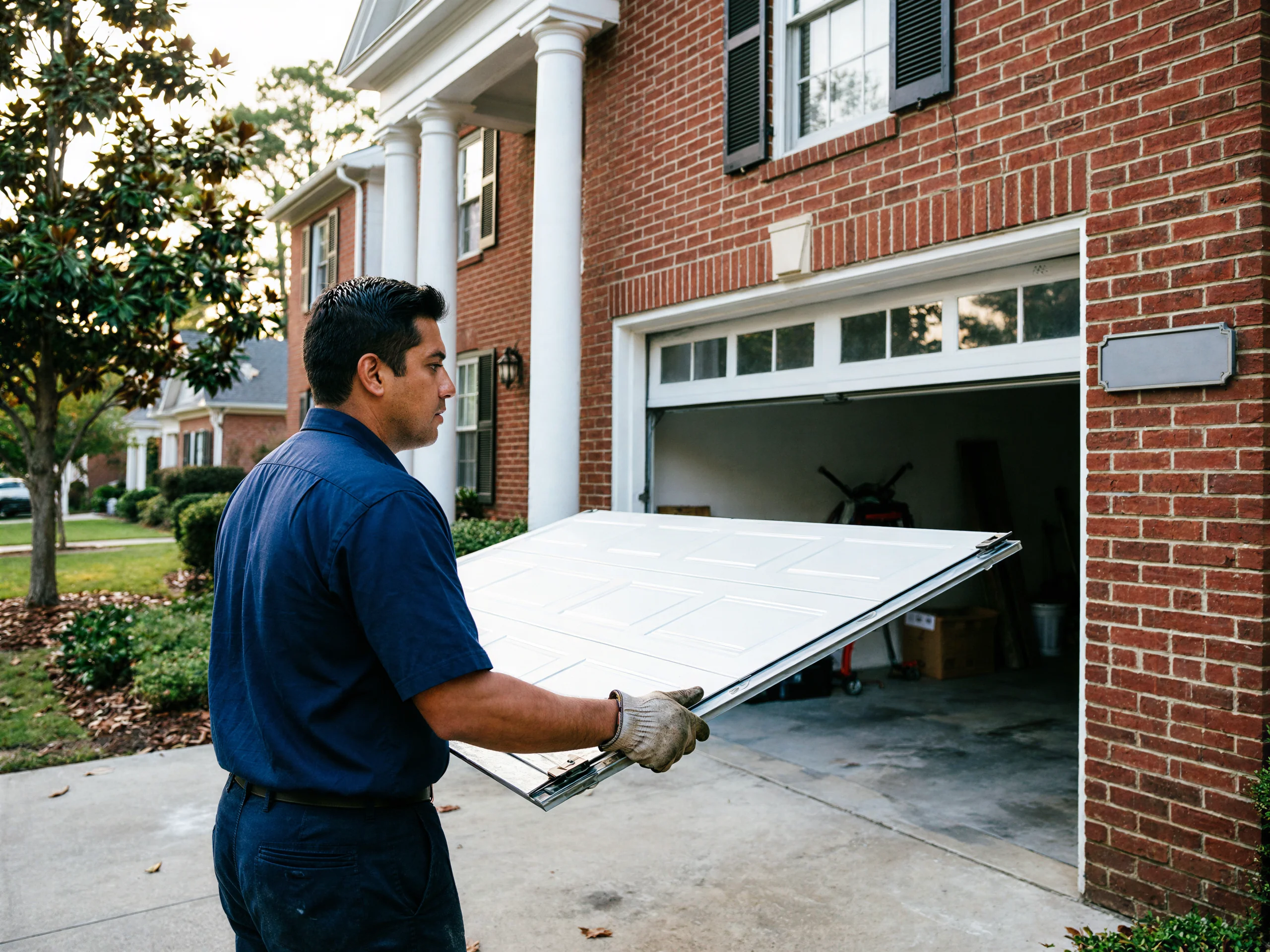
That drive matters for how we schedule: we don't stage a truck out this way overnight, so a panel swap here gets booked as its own trip rather than squeezed between two closer calls. It also means we measure twice before we load the truck - driving 18 miles back for a panel that's a half-inch off the track width wastes everyone's afternoon.
Local raised-panel steel doors
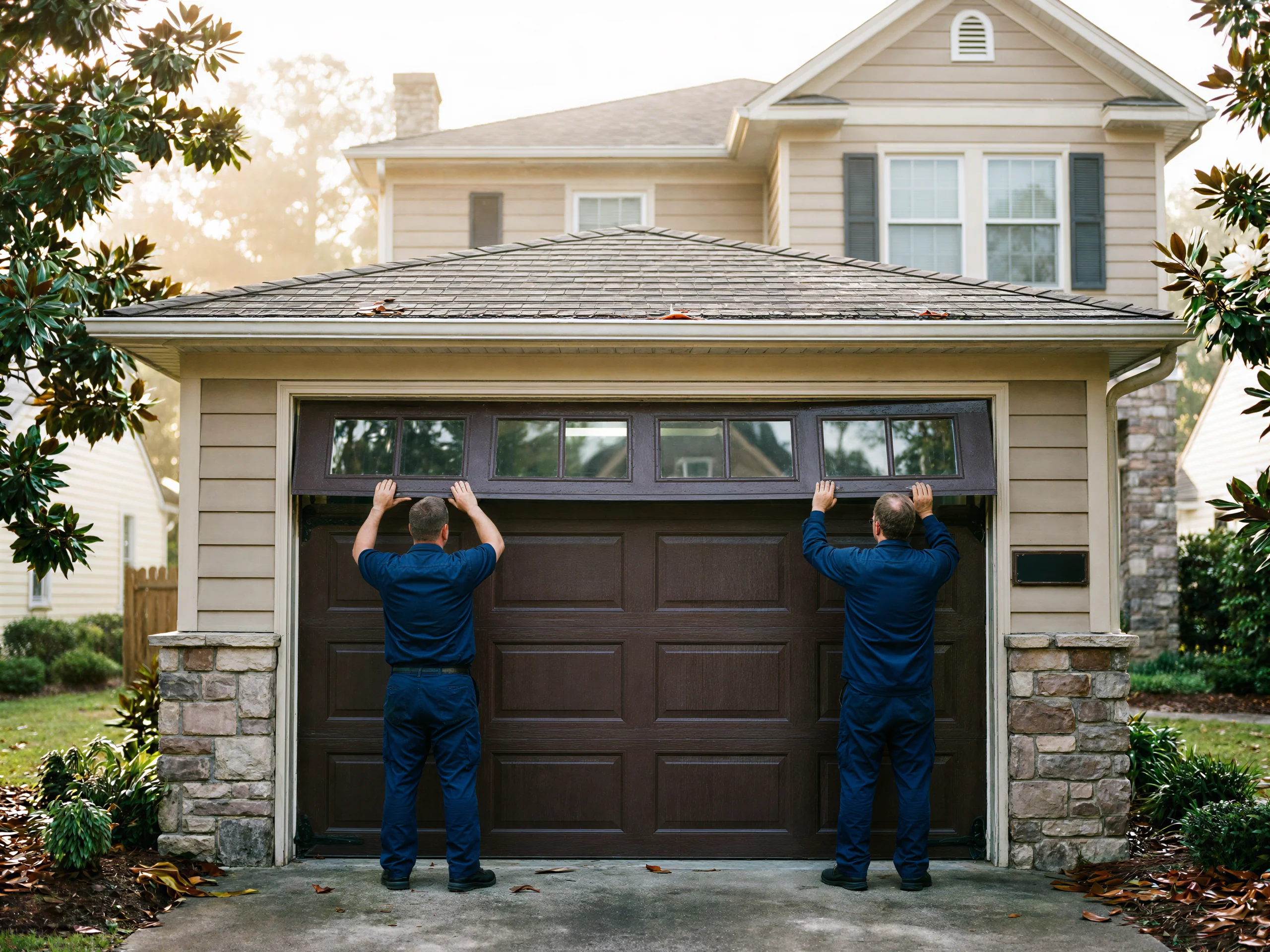
Most of the panel work we do in this part of the service area is on doors that match the local build pattern: steel sectional doors from the 1980s and 90s, often with a raised-panel or flush design that was standard on production homes of that era.
Reading existing panel details
If your door was installed when the house was built, there's a decent chance it's original, which changes what we need to bring. We pull the panel dimensions and the door brand off the existing section when we can read it, and we confirm stock before we commit to a date, because driving out here twice on the same job is the thing we try hardest to avoid.
Stocked Parts
We carry the panel profiles and skin gauges that fit the steel sectional doors common to houses built from the mid-1960s through the mid-2000s, which covers the great majority of what's on the ground in this area.
Single section straight swap
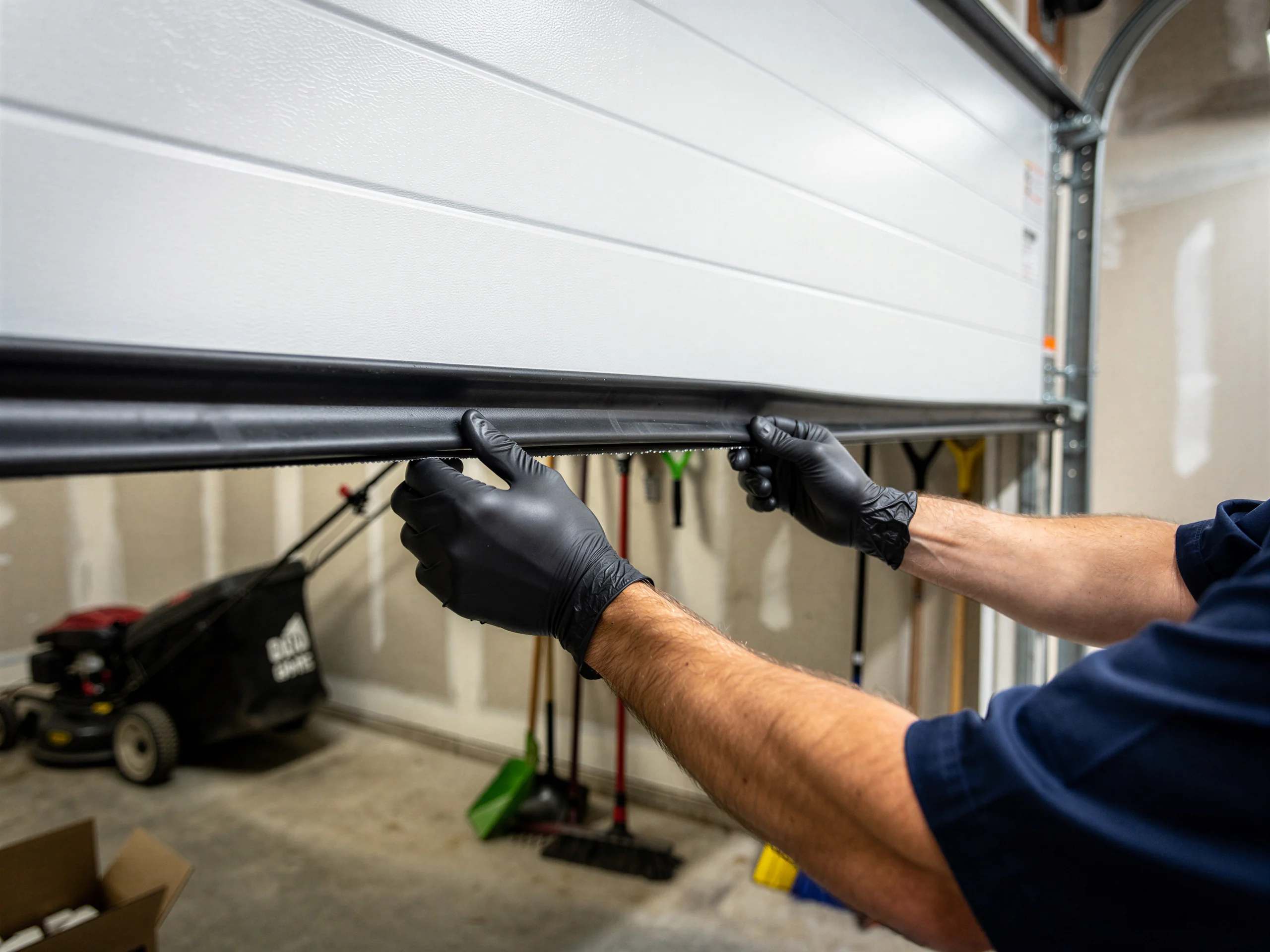
A single damaged section on a door from that window is usually a straight swap - same groove pattern, same panel height, no fight with discontinued hardware. Where it gets slower is color and texture match on an older door that's faded or on a less common embossing pattern.
UV fade shows new panel
Steel doors chalk and lighten with UV exposure over twenty-plus years, and a new panel next to three old ones can look like exactly what it is: new. We'll tell you straight if that's the case before we order anything, rather than let you find out on install day.
Matching insulation class
For a cold-climate area like this, we also check that any replacement panel keeps the same insulation class as the rest of the door - mixing an insulated panel into an uninsulated door (or the reverse) creates a cold spot that shows up as condensation on the inside face come winter.
What It Costs
We don't post panel pricing for Peachtree Corners specifically, since the number depends on the door brand, the panel's insulation and width, and whether the color needs to be special-ordered. What we can tell you is how we scope it: we ask for the door's brand and a photo of the damaged section, and for an 18-mile trip out here we try to confirm that the part is correct before we drive it out, since a second trip costs both of us time. If a single panel comes in overpriced or back-ordered on an older door, we'll say so directly rather than book a job that doesn't make sense.
What You Are Seeing
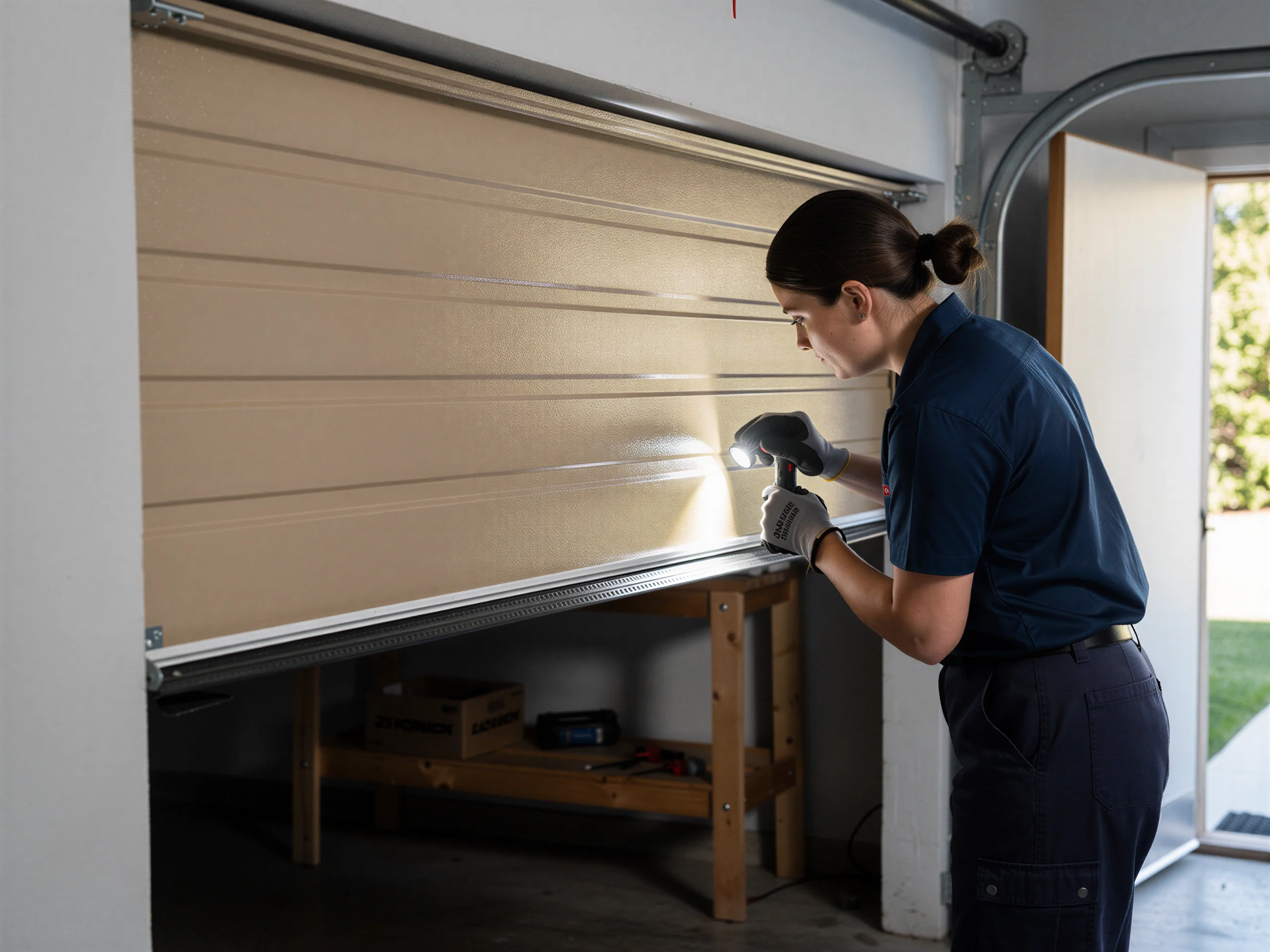
The panel damage we see out this way is mostly impact - a trailer hitch, a basketball rim mount gone wrong, a car bumper that caught the bottom section.
Dents rarely total the door
On a steel door from the 1980s or 90s, a dent or a crease in one panel rarely means the whole door needs to go; the sections are built to be replaced individually, and the track and spring system usually outlasts any one panel by decades.
Bent stile throws off square
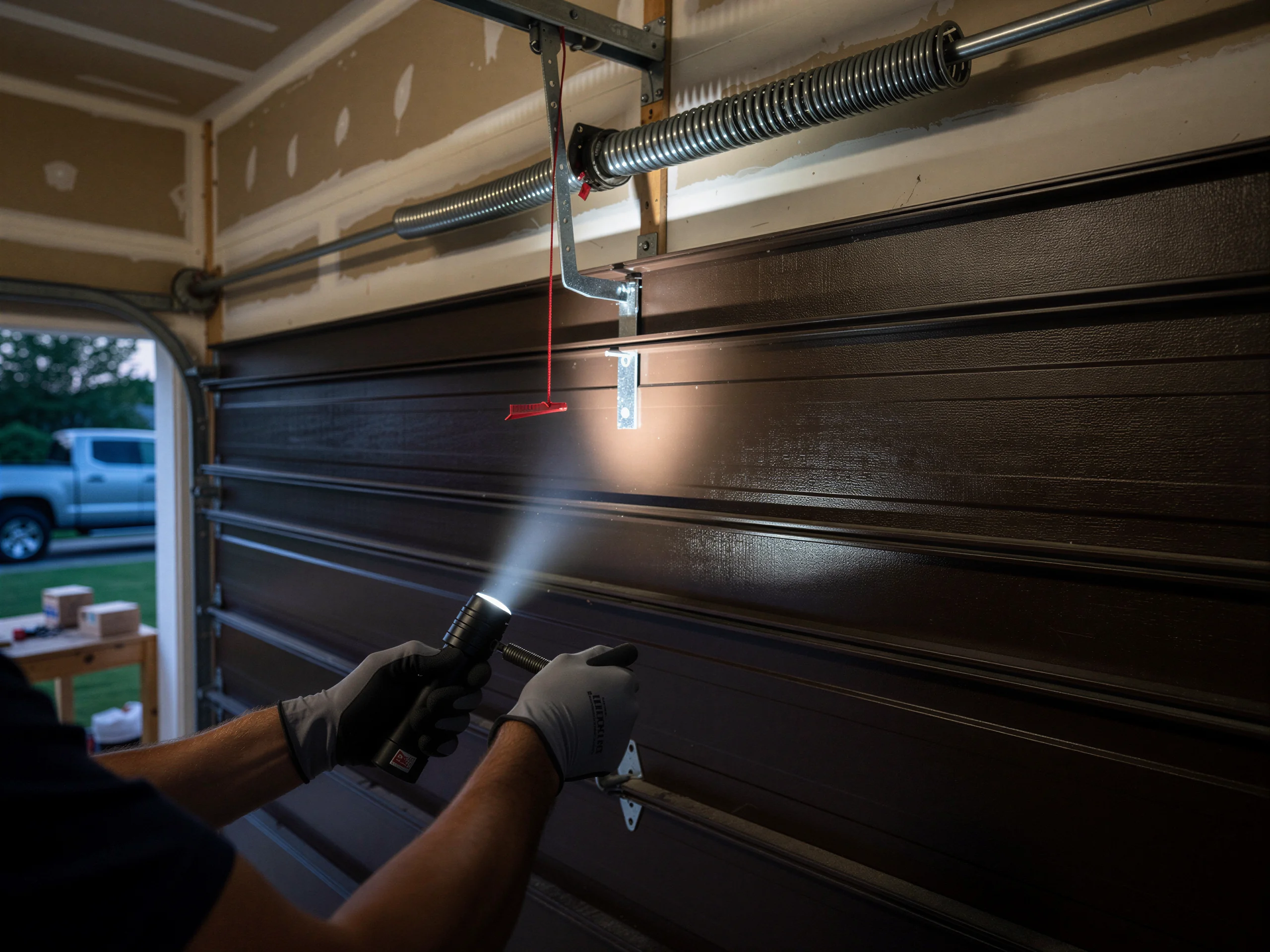
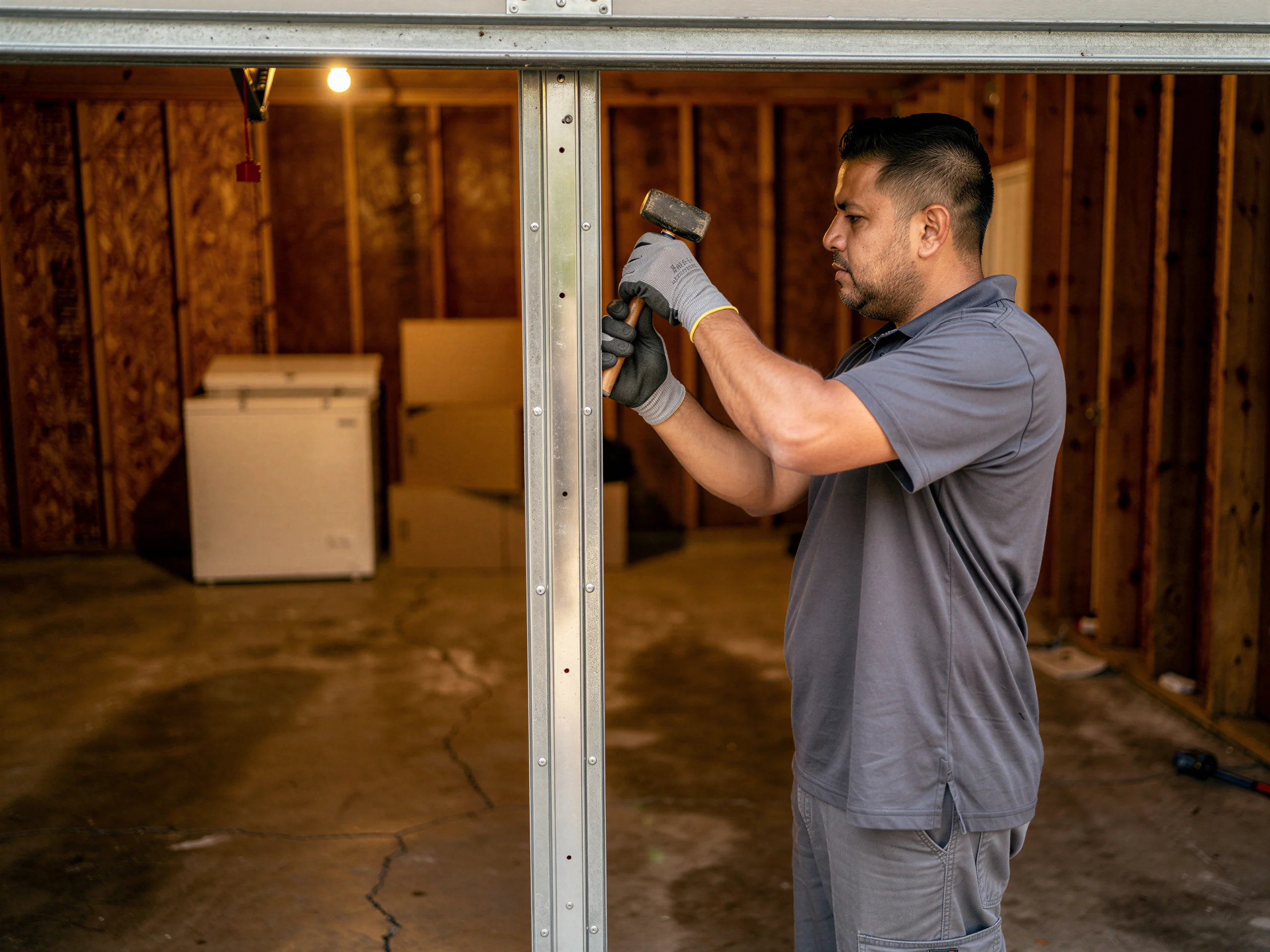
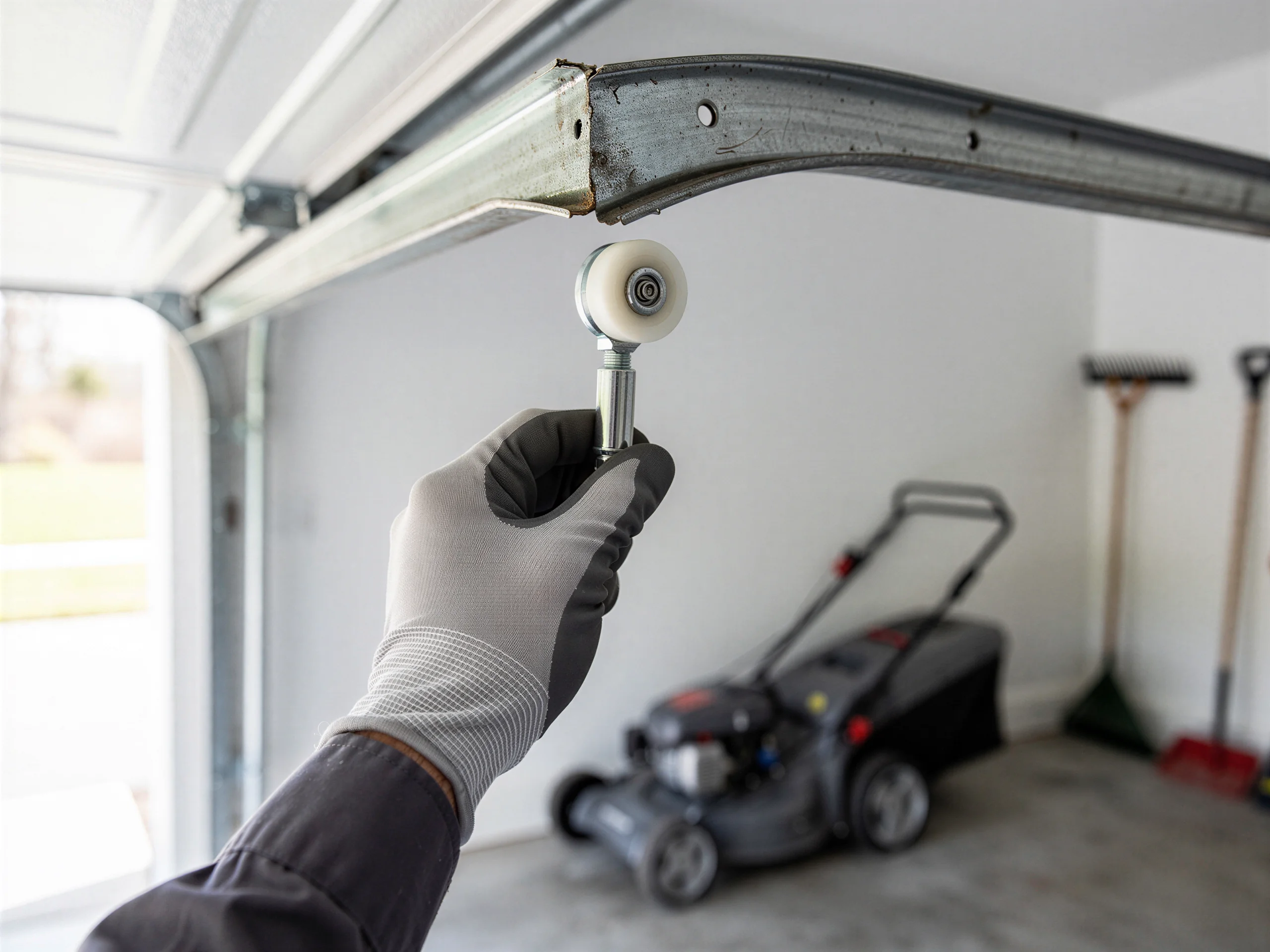
What we check before quoting a panel-only fix: whether the dent has bent the stile (the vertical rail the rollers ride in), because a bent stile throws the whole section out of square and no panel swap fixes that on its own.
Two damaged sections threshold
We also look at whether the door has two or more damaged sections, since at that point replacing panels individually can cost more than replacing the full door - we'll tell you if you're past that line rather than sell you parts you don't need.
Talk to a local pro
Garage door service in Marietta?
Same-day service with honest, upfront quotes.